Introducing allergenic foods early and feeding them regularly may significantly reduce a baby’s risk of developing food allergy.
For years, parents were told to avoid giving babies foods like peanut or egg. Today, we know something very different.
Research now shows that introducing common allergenic foods to babies around six months of age — and continuing to feed them regularly — can significantly reduce the chance of developing food allergy.
That’s a big deal. Food allergy affects millions of families and can change how a child eats, learns, socializes, and participates in everyday life. Prevention matters.
What does “eat early, eat often” mean?
It’s simple:
- Start introducing common allergenic foods around 6 months of age, when your baby is developmentally ready.
- For babies at higher risk, introduction may begin earlier once developmentally ready — but not before 4 months.
- Keep feeding the food regularly (about once a week or more) after it’s been safely introduced.
Consistency is key. Once a baby eats a food without reacting, continuing to feed it helps maintain tolerance.
Who is considered higher risk?
Some babies are more likely to develop food allergy. This includes babies who:
- Have eczema
- Already have a food allergy
- Have a parent or sibling with eczema, food allergy, asthma, or hay fever
Which foods should be introduced?
The most common causes of food allergy in babies are cow’s milk, egg, peanut, tree nuts, sesame, wheat, soy, and fish.
Feed your baby one food at a time and see how they respond. Introduce small amounts in appropriate forms to your baby (for example, smooth nut butters thinned with water or breastmilk — never whole nuts) – and go slowly.
The study that changed everything
These recommendations weren’t guesswork. A landmark clinical trial — the Learning Early About Peanut Allergy (LEAP) study — showed that introducing peanut early in infancy dramatically reduced the risk of developing peanut allergy.
Before this research, parents were advised to delay peanut and other allergens. After it, guidelines around the world shifted toward early introduction.
More than a decade later, follow-up research shows encouraging news: in places where families followed early introduction guidance, rates of allergy have declined.
That’s prevention in action.
Why this matters — even if your family isn’t affected
Food allergy doesn’t just affect individual families. It impacts schools, childcare centres, camps, restaurants, and entire communities.
Preventing food allergy where possible means:
- Fewer medical emergencies
- Lower healthcare costs
- Less burden and anxiety on families and individuals
Looking for practical guidance?
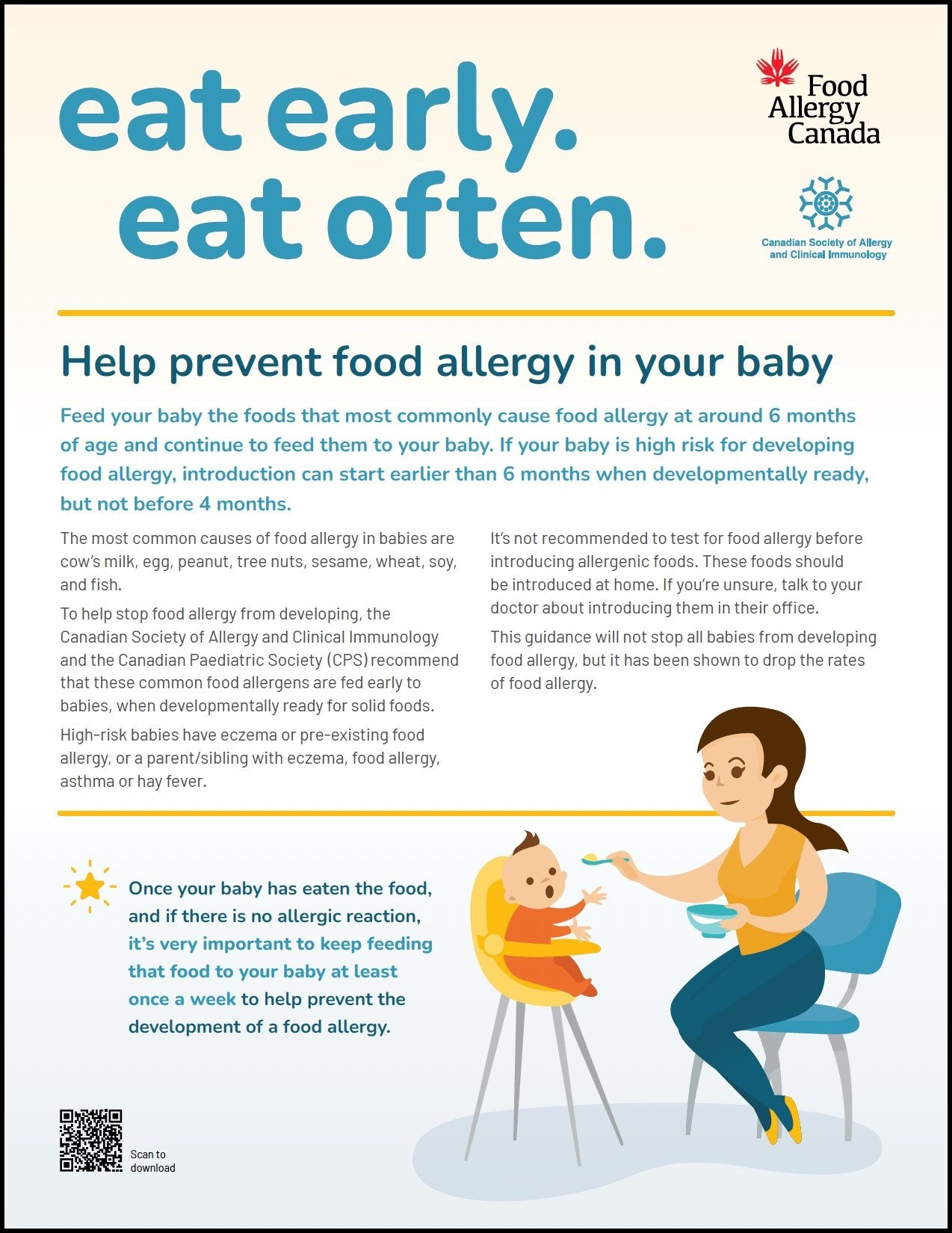
If you’re wondering how to introduce allergenic foods safely — or what this looks like in real life — download the Eat Early. Eat Often. resource. It includes:
- Practical feeding tips
- Age-appropriate preparation ideas
- Simple recipes
Because when it comes to food allergy prevention, timing matters — and small bites can make a big difference.
To learn more about early introduction and food allergy prevention visit foodallergycanada.ca/earlyintro.
GET READY FOR
spring & pollen
SEASON
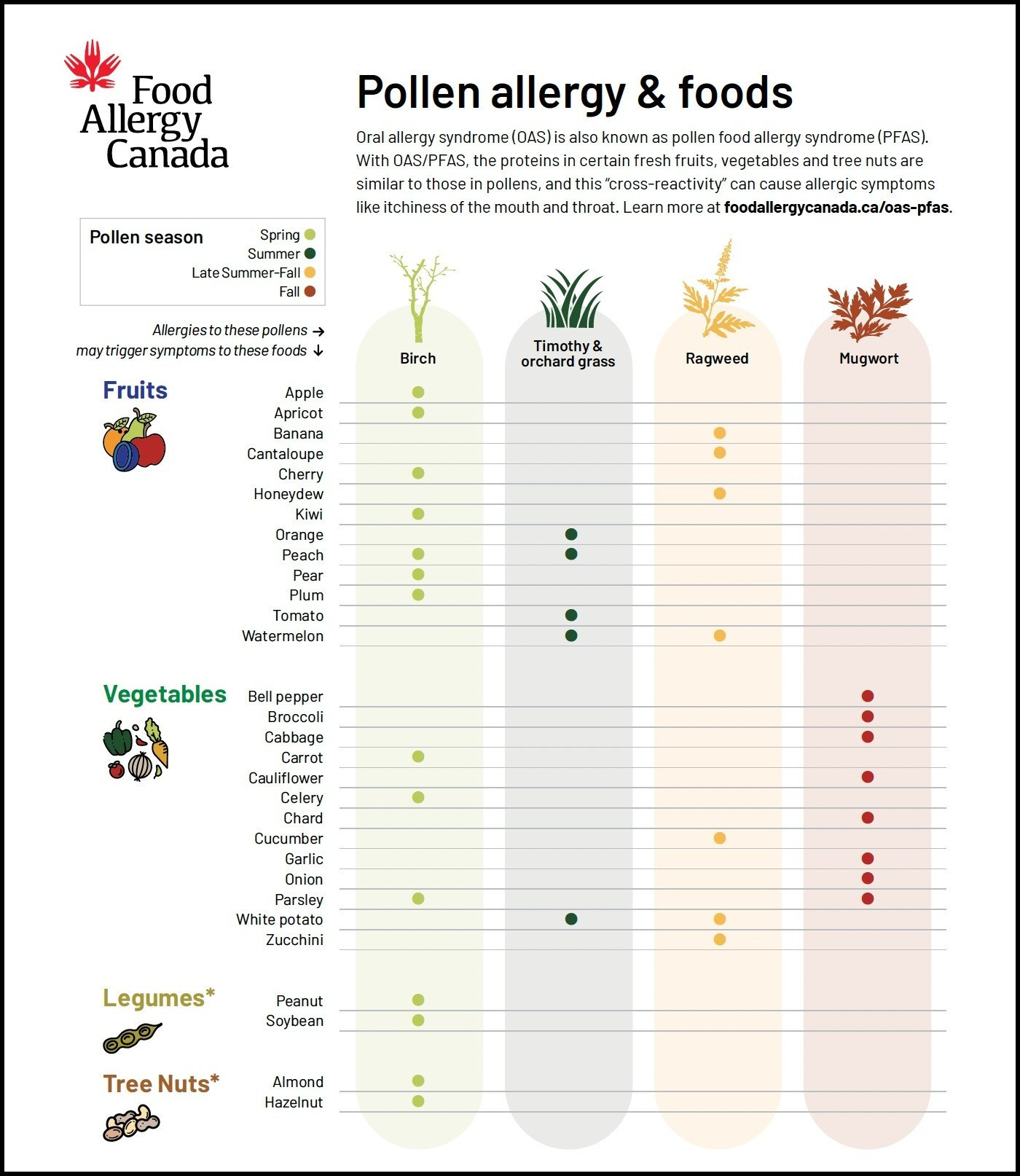
With the start of spring and pollen season only a few weeks away, it’s the perfect time to think about pollen food allergy syndrome (PFAS). PFAS is considered a type of food allergy.
With PFAS, the proteins in certain fresh fruits, vegetables and tree nuts are similar to those in pollens, and this “cross-reactivity” can cause allergic symptoms, like itching in the mouth or throat. Those with PFAS typically have allergy to pollens like birch, grass, ragweed or mugwort (another weed). Symptoms of PFAS can happen all year long, although sometimes people notice more severe symptoms during pollen season.
For more information visit foodallergycanada.ca/PFAS.