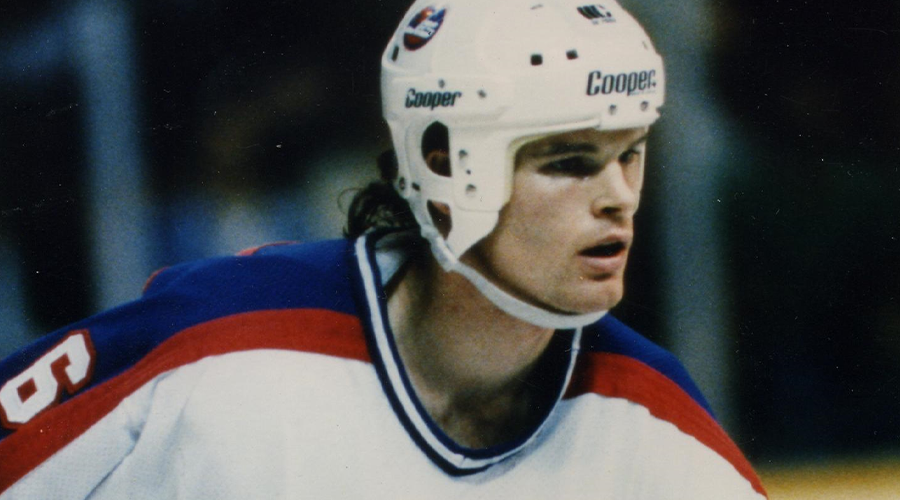
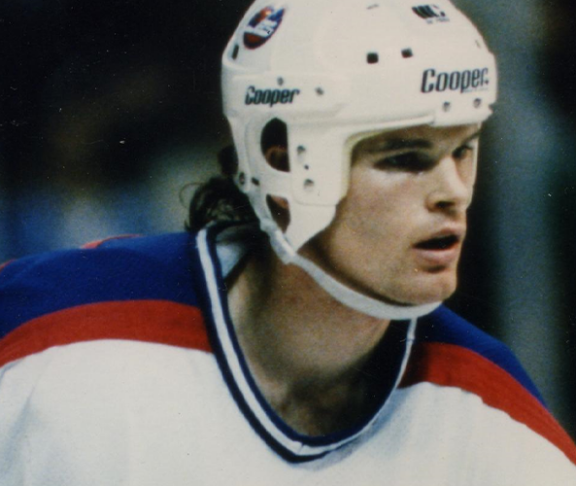
The former NHL player shares how adaptation, perseverance, and self-advocacy shaped his career and continue to guide his accessibility work.

As the first legally Deaf player in the NHL, what did breaking that barrier mean to you, both personally and for the Deaf and hard-of-hearing community?
Point of clarification: By framing the questions as the “first” player, means there have been others after me. While I welcome the day another deaf player plays in the league, to date, I am the only deaf player since the NHL started 108 years ago.
I was not thinking about breaking any barriers when I was drafted 12th overall in the 1982 NHL Entry Draft, or when I played my first NHL game later that year. I was just thrilled to be playing in the NHL–the pinnacle of every young Canadian boys’ dream. I come from a family of five boys and one girl. My father and all the boys are deafened. My mother and sister have perfect hearing so growing up they had to put up with five screaming boys who couldn’t hear themselves while my father took his hearing aids out! 🙂
My father was a great multisport athlete in his own right then went on to become a dentist. He was my role model growing up. It is not politically correct to say this today but he told my brothers and I, “you may have a handicap (challenge to overcome), but you do not have a disability”. This was always my mindset. I worked hard and did a few things differently from other players but the results were plain to see in competing for my position on the teams I played for. There are no accomodations in professional hockey–you either perform to exceed expectations or somebody else will take your job.
I didn’t truly appreciate the barrier I broke until I was invited to the Stan Mikita Hockey Hockey for the Hearing Impaired in Chicago in the summer of 1985. The camp was run by the American Hearing Impaired Hockey Association (AHIHA). My brothers were the only deaf kids I knew playing hockey growing up so being exposed to 70-80 kids all learning and loving to play hockey was an eye opener for me. They did not have any Canadian kids at the camp because they derived the US National Deaf Men’s Hockey Team from the players at the camp. This inspired me to start my own hockey school of Canadian kids.
I can’t answer what it meant to the broader deaf community (you need to ask others) when I broke the barrier, but for me personally it was a life-long dream to play in the NHL. Like others who played in the league, it takes a tremendous amount of hard work, preparation, sacrifice, positive thinking, courage, resilience, and perseverance. I would not have made it without strong support from my parents, family and friends, and guidance from coaches along the way. I feel incredibly lucky to be the first and a hope to see a second, third, and more in the coming years.
What were some of the biggest accessibility or communication challenges you experienced throughout your hockey career, and how did you learn to navigate them?
Many people have asked me over the years, “What’s it like playing in the NHL when you are deaf?”. My response is, “I was born this way so I do not know what I’m missing so it’s a difficult question to answer”. That said, I know I did things differently than my fellow players. Here are a few of them:
– I deployed a “monkey-see, monkey-do” strategy when a new drill was introduced to the team. I would never go first in case I misunderstood the directions. I would watch the drill first then go second.
The higher level of team sport you play, the more important communication becomes. There is a ton of talking that happens on the field/floor between teammates during the play in basketball, volleyball, football, baseball, and on the ice in hockey. In order to overcome this, I developed into a defensive defenseman. I studied game film and knew our defensive positional play better than even the coaches so I was always in the right position on the ice. As a result, I did the majority of the talking on the ice with my partner. If he wanted to communicate with me, he did not talk–he screamed–and you could hear it in the upper rafter of the arena.
When retrieving a puck in the defensive zone with a pursuing forechecker, I understand players with good hearing can hear the skates in the ice of the pursuing player and can judge how fast they are coming and how closely they approach. I did not have this luxury but I learned in junior hockey they clean the plexiglass before every game so the paying fans can have an unobstructed view of the action on the ice. This created a mirror-like reflection in the plexiglass so when going back to retrieve a puck I would quickly glance at the glass, not through it, to see the reflection of what was happening behind me. I could tell how close the forechecker was, how fast they were coming, and if they were off my left or right shoulder so I knew which way to turn with the puck.
I played in the era of touch-icing so I taught my goaltenders to put their arm in the air to let me know if icing was being called. If icing wasn’t called, and since they are looking up ice, I asked them to point one way or the other to let me know which way they thought I should turn with the puck.
I was a defensive defenseman and usually paired with an offensive defenseman. My partner usually took off to join the rush and I took care of things at home. I didn’t realize I did this until I started teaching other kids how to play defense but I would subconsciously and continuously count the number of opposing jersey’s in front of me. I specifically remember being on the offensive blueline in Edmonton playing against the great Olier team in the 80’s. 1,2,3,4,5 skaters in front of me, all good… 1,2,3,4,5… 1,2,3,4… hey, where did that fifth skater go? Turns out my bench was yelling at me that HHOF player Glenn Anderson had snuck behind the defense. I could not hear my vocal bench warnings but things did not add up in front of me so I knew to check behind me and saw Anderson so I could defend the breakaway pass.
I have a 100 dB loss which is considered profoundly deaf but with my powerful hearing aids, I can hear a bit but I mainly rely on lip reading to understand what is being said. A good example is I was a left defenseman and HHOF player Lanny McDonald was a right winger. Every time we lined up across from each other he said something but I could never understand him because of his big moustache! 🙂 The point being is many coaches would write on the whiteboard and talk at the same time with their back to the players. To me, it sounded like Charlie Brown’s teacher, “Wawawawa”. I had to teach all my coaches to write first, then face the players to start talking. I would also position myself close to the front of the whiteboard. If the coach was a right handed writer, he spoke over his left shoulder so I would position myself on his left close to the whiteboard. If I still wasn’t clear, I wasn’t afraid to ask questions or ask the coach to repeat themselves. It is critically important to self-advocate.
Before every game, I approached the one-ice officials and introduced myself if I had not met them previously. I explained that I wore hearing aids but oftentimes my perspiration would cause them to stop working so I encouraged them to blow their whistles as loud as possible, and, if I hit someone a tad late after the whistle, to give me the benefit of the doubt. 🙂 Also, if I happened to get into an altercation and my helmet came off, my hearing aids would usually go with it and end up on the ice so I would appreciate it if they could pick them up.
Socially, I developed a self-deprecating sense of humour. I learned this at a young age in school. Kids can be vicious in their teasing. If somebody teases you and you show that it bothered you, it got worse so made sure not to show it bothered me and laughed it off. They came to the realization that it didn’t bother me so instead of laughing at me, they laughed with me and they quickly came to accept me. I deployed this with every team I played for. Let’s face it, I was wrong in my interpretations of what was being said more often than not at team dinners so I would respond with off-the-wall comments that had nothing to do with the real subject at hand. You can’t help but laugh at yourself. I was also very open about my hearing aids with my teammates. I played junior in Cornwall and later in Calgary with HHOF player Doug Gilmour. Every once in a while he would put my hearing aids on. His reactions were hilarious in front of my teammates.
Lastly, even though I am profoundly deaf, I always downplayed it, particularly with my coaches and management. The NHL is apex-competitive so I never, ever wanted them to think I could not be as good or better than another player.
How has your experience in professional sport shaped the work you do today around accessibility, inclusion, and opportunities for Deaf and hard-of-hearing Canadians?
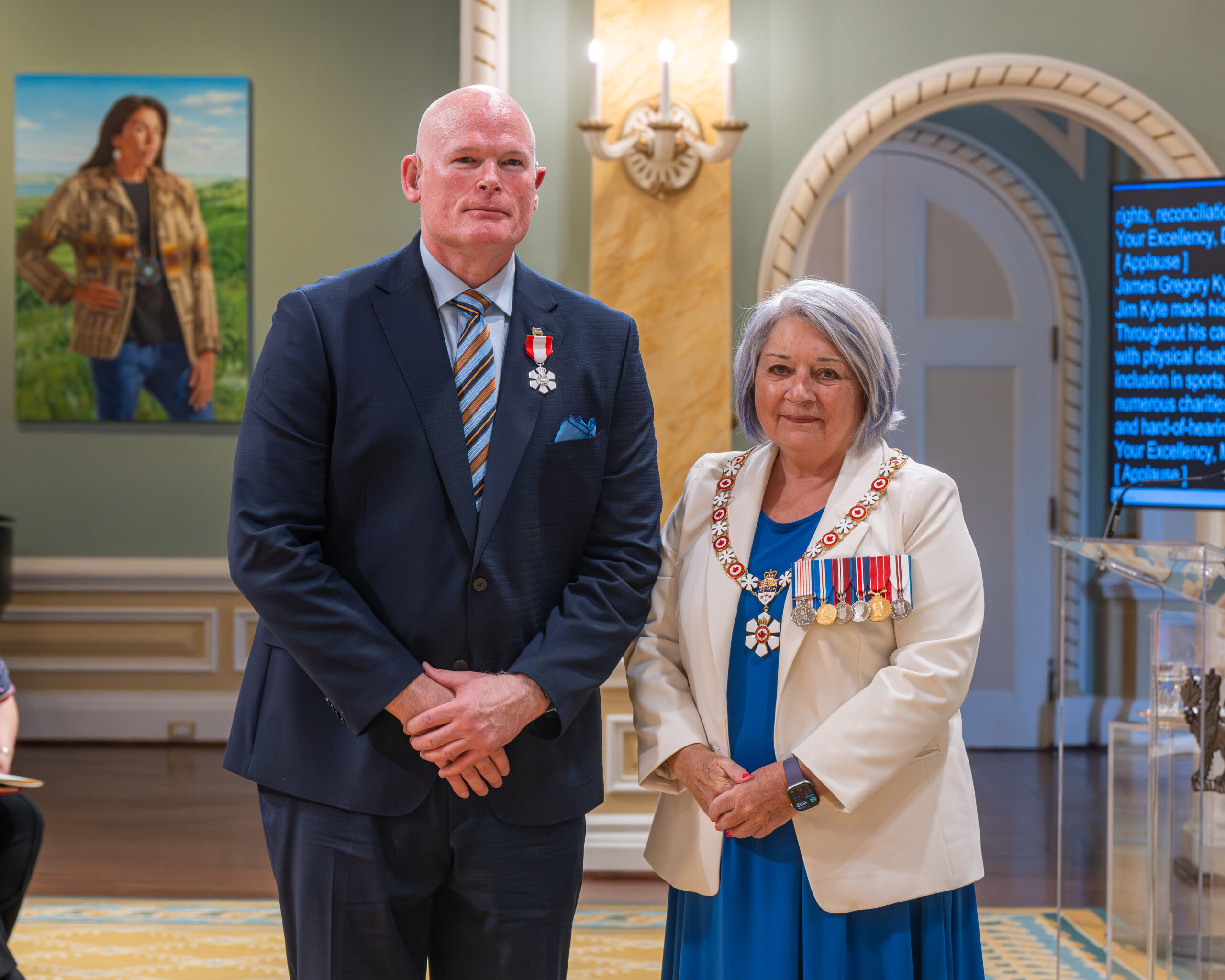
I’ve come to learn that as a professional athlete you are a role model, whether you want to be or not. As the only deaf player in the history of the NHL, I am a role model in particular for the disability community. My professional hockey career ended when I was a victim of a car accident. I had a brain injury and suffered from severe post-concussion syndrome. My wife and I had three very young children at the time, and I became the fourth kid on the couch for 18-24 months. During this time one of my sons was diagnosed with autism, and in the past 15 years, I have had five heart surgeries, joint replacements, and arthritis. I can relate with lived experience with many people.
I learned the value of advocacy from my mother. When we were young, the school board in Ottawa wanted to send my brothers and I to a deaf school but my mother fought the school board in order to have us integrated into a regular classroom. She was successful and as a result, I can communicate orally. In my own experience, self-advocacy is critically important. People can’t read your mind and I have invisible disabilities so it is important for one to communicate your needs and educate others.
I have a voice and I try to use it to make our community a better place to live for all. The same qualities that made me successful on the ice–hard work, preparation, sacrifice, positive thinking, courage, resilience, and perseverance–have helped me navigate a successful off-ice career. Advocacy takes time and persistent effort. I have encountered many people and organizations with unconscious bias, and sadly in some cases, overt bias towards people with disabilities. People have false filters and immediately judge you on what you can or cannot do based on sad stereotypes people hold about individuals with physical, sensory, cognitive or hidden disabilities.
There is a huge untapped pool of human resources in Canada. The word I like to use is “opportunity”–give everyone an opportunity and you will be surprised what people can achieve if given a legitimate chance. Using myself as an example, the odds are incredibly slim for a young minor hockey player to make the NHL, and even slimmer to have a long career. I did things differently from my peers, but the results speak for themselves. A person with a disability may do things differently, but the results may be much better than the average person. The only way to find out is to drop the false filters, provide the opportunity, and find out.
I absolutely hate it when accessibility is bolted on after the fact instead of being incorporated from the outset. Proactive Universal Design benefits everyone in society, not just those with disabilities. I loved hearing Former Lt. Governor of Ontario David Onley when he told his audience that people with disabilities are the largest minority group in Canada, and it’s the only one you can join at any given moment. You could see the pin drop from some of the able-bodied audience.
Where do you think organizations, workplaces, and communities still have the most work to do when it comes to creating genuinely accessible environments for Deaf people?
There is now much needed legislation such as the Accessible Canada Act (ACA), and the Accessibility for Ontarians with Disabilities Act (AODA) but we have a long way to go from compliance to ingraining it into our culture. This takes time–training and education; feedback loops directly with people with disabilities to review, test, and evolve accessibility standards instead of treating compliance as a one-time event; and, leadership and advocacy to normalize disability inclusion.
Specifically for Deaf people, technology has come a long way in recent years. In the past, my cell phone was just a texting device but with Bluetooth in my mobile phone and my hearing aids, plus video conferencing platforms with AI generated Closed Captioning (CC) combined with lip reading, I am able to talk on the phone now.
My hope is technology will continue to improve so the quality of Closed Captions service and Assistive Learning Systems (FM, infrared, or loop systems that amplify sounds directly into hearing aids and cochlear implants) for movie theatres, television shows, small meetings, weddings, conferences, and large events becomes readily and cheaply available.
For those who communicate in sign language, having readily available ASL and LSQ interpreters is a must. Even better yet, ASL is an absolutely beautiful language to learn so if more people learned sign language, the better.
There are rudimentary AI systems now that translate spoken or written language into sign language but these are independent natural languages with their own complex grammar and spatial syntax plus many in the deaf community feel the avatars look stiff and lack emotional nuance, which is so important in sign language. There is much room for improvement but I am hopeful for the future.
What would you like younger Deaf athletes, students, or professionals to take away from your story and the path you have built?
For athletes: if you think you can, or you think you can’t–you are right. You need the right positive mindset to achieve any goal. Perseverance and failure cannot co-exist. Failure happens when you decide to quit.
Students (and Parents): use the tools available to you. If you think the system will take care of you, you are sadly mistaken. Study the rules and advocate for your child. You won’t receive anything unless you ask for it. If you are in postsecondary, absolutely register with the center for accessible learning at your institution. Self-advocate for accommodations as they exist to help you succeed.
Employers: tap into the vast pool of human resources available in the disability community. Give someone an opportunity to shine.
Professionals: self-advocate for accommodations in the workplace. Asking for accommodations is a necessary step to ensure equal participation, not an unfair imposition on others. Your organization will have a healthier, happier, and contributing employee. Never, ever feel you are imposing on anyone. Don’t have a clear line of sight to the speaker at a meeting? Get up and move. Don’t be shy.