


Nicola Worsfold
Executive Director of Defeat Duchenne Canada
Canadian patients and families have helped advance promising Duchenne therapies through research, yet access to those treatments continues to lag behind other countries. For a disease where every year can mean lost muscle function, Canada needs to close the gap between innovation and access.
For the approximately 800-1000 Canadians living with Duchenne muscular dystrophy, scientific progress is measured not only by what is possible in the laboratory, but by whether that progress reaches individuals and families in time to make a meaningful difference. Duchenne is a rare, progressive genetic disorder that primarily affects boys and young men at birth, causing muscles to weaken over time and leading to increasing disability and shortened life expectancy.
Since 1995, Defeat Duchenne Canada has invested $20.3 million in research worldwide to advance treatments, improve care and ultimately find a cure. Canada is a long-standing leader in Duchenne research, with Canadian researchers, patients, and families playing an important role in international clinical trials that have contributed to the development of multiple new therapies approved in other countries.
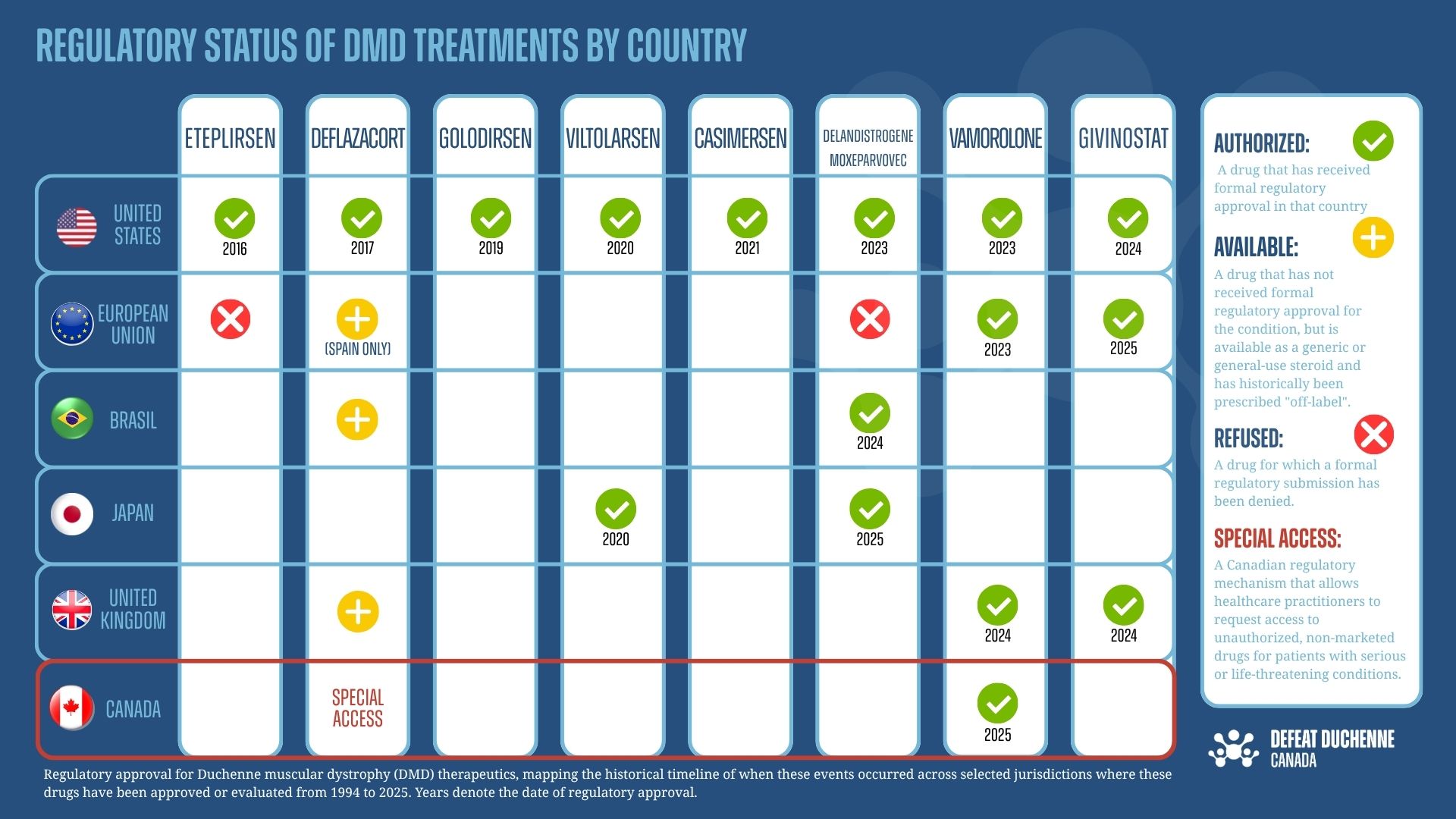
Yet despite Canada’s significant contribution to Duchenne research, access to nearly all approved or emerging therapies remains out of reach here than in countries like the United States, Europe and the United Kingdom. In Canada, access is often limited to clinical trials, special access pathways or industry patient support programs. As of October 2025, only one of nine therapies for Duchenne muscular dystrophy has been approved by Health Canada. This inequity highlights the disconnect between Canada’s research leadership and timely, equitable access to the treatments Canadian families have helped to advance.
“As a Duchenne mom, I know first-hand families participate in research with hope; not only for their own children, but for every family living with Duchenne,” says Nicola Worsfold, Executive Director of Defeat Duchenne Canada. “We are committed to working with researchers, governments and industry to ensure that Canadians have timely access to the therapies they have invested their blood, tissue and time to make possible.”
A recent report from the Pharmaceutical and Life Sciences Sector Task Force recognizes that Canada takes longer to approve, price and fund new medicines compared to peer jurisdictions. It also highlights how fragmented and sequential drug access processes can contribute to longer timelines and make Canada a less attractive market for launching new therapies.
There are some encouraging signs. Canada’s National Strategy for Drugs for Rare Diseases has placed rare disease access on the national agenda, while Health Canada’s Red Tape Reduction and regulatory modernization efforts are seeking to streamline clinical trials and make regulatory processes more efficient. For families living with Duchenne today, time is muscle. Now is the time for Canada to build on this momentum and create an environment that not only attracts and advances promising treatments, but acts quickly to ensure treatments reach Canadians living with rare diseases like Duchenne before it’s too late to make a meaningful difference.
To learn more visit www.defeatduchenne.ca.