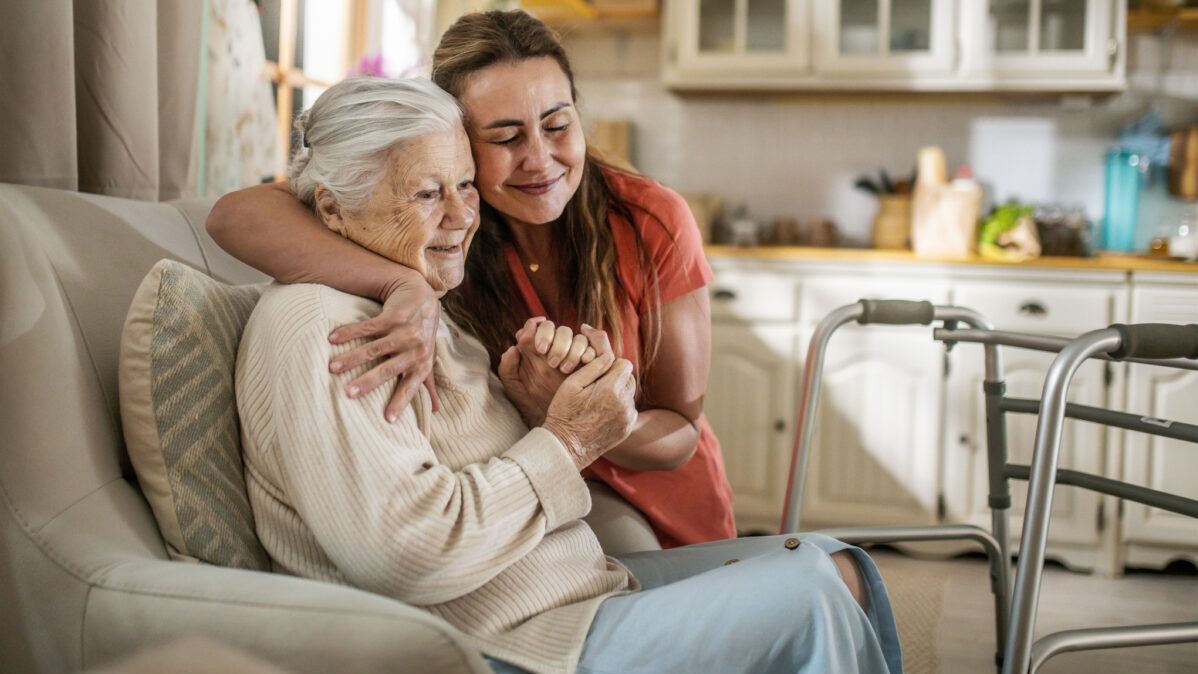

Caregivers are woven into geriatric assessments, ongoing case management and connections to community supports.
Caregivers play a critical role in helping older adults stay safe and independent at home. At Niagara Health’s Geriatrics Assessment Program, they are not an afterthought. They are part of the care team.
The program, which includes the outpatient clinic and two rapid assessment clinics, recorded 3,518 visits in 2025. About 150 referrals come in each month, most involving older adults with concerns about cognition, mobility, behaviour or function. In many cases, those concerns are first raised by a caregiver.
“We don’t look at the patient in a silo,” says Stefanie Irish, registered nurse and clinical manager of Niagara Health’s geriatrics program. “We look at them holistically, and that always includes the caregiver.”
Many patients depend on spouses, adult children or friends to help them remain safe at home. Irish says that support is central to the program’s goal of helping people age in place and avoid unnecessary hospital stays or early transitions to long-term care.
“I don’t think we could care for this population without caregivers,” she says. “Anything we do to support caregivers ultimately supports our patients as well.”
Caregivers help shape diagnosis and care planning
That philosophy shapes how the clinic operates. Appointments are long and structured to include caregivers from the start. While patients complete clinical assessments, caregivers spend significant time with physicians sharing observations and concerns that help inform diagnosis and care planning.
“They are the first ones to notice changes,” says Christine Lam-Au, registered nurse and case manager in geriatrics. “Without them, we would be doing a lot of guessing.”
The program uses a case management model, which means support does not end after a single visit. Many patients live with progressive conditions, and caregivers are encouraged to reach out when needs change.
“We have an open-door approach,” Irish says. “Caregivers can call with questions, and we help them navigate what comes next.”
Addressing isolation and burnout among caregivers
Support extends beyond medical care. The team screens patients, and often caregivers, for issues such as social isolation and loneliness. Research shows those factors have a significant impact on health, particularly for people providing unpaid care.
“Caregivers are at high risk of isolation because so much of their time is focused on caring for someone else,” says Caitlin Mahl, a quality and patient safety specialist supporting the program’s screening work. “You can’t pour from an empty cup – caregivers’ own needs must be met so they can care for their loved ones.”
When needs are identified, staff help connect families with community supports, including Ontario Health at Home, the Alzheimer Society and Niagara Region Senior Services. Referrals are often made on behalf of caregivers, along with education and practical strategies to reduce burnout.
“The caregiver is part of the care team,” Lam-Au says. “When they are supported, they are better able to support their loved one. That benefits everyone.”
To learn more, visit niagarahealth.on.ca.