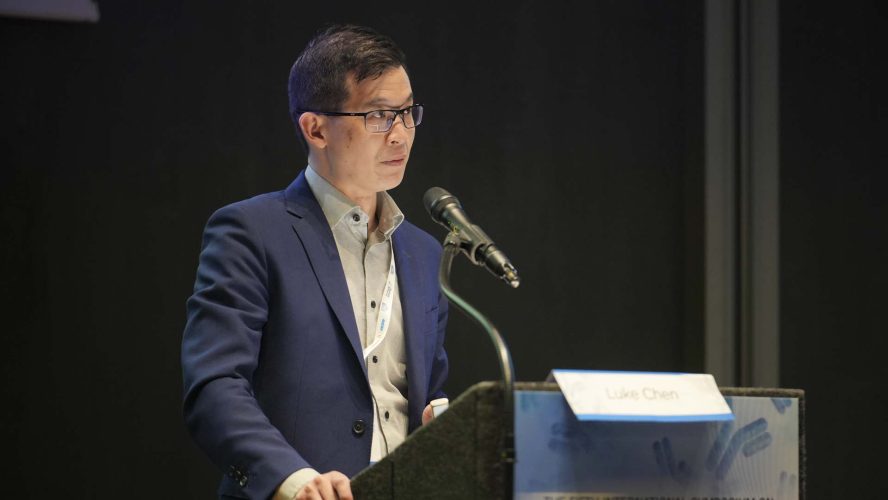
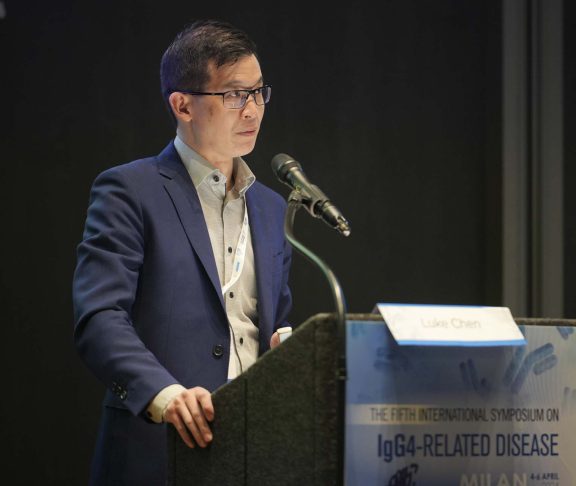
From years-long diagnostic journeys to breakthrough treatments using existing drugs, Dr. Luke Chen explains how collaboration, persistence, and the next generation of physicians are helping bring clarity—and hope—to patients living with rare diseases.
Many people living with rare diseases spend years searching for answers. From your experience, why are rare conditions so difficult to diagnose—and what can patients do when they feel something is being missed?
Three important principles are: 1) be your own best advocate and 2) work with your physician or nurse practitioner to try and get to an answer 3) be realistic
- Being your own advocate involves doing your own research thoughtfully and responsibly. The internet can be a powerful tool when used properly. Sometimes, a simple search combining key symptoms, medical problems and laboratory or imaging results can provide useful clues or point to Canadian or international specialists with expertise in a rare condition. Because misinformation online is common, it is crucial to rely on reputable, patient-centered sources. In my field of Hematological diseases, groups like the Histiocyte Society, Castleman Disease Collaborative Network, and IgG4ward are non-profit organizations providing reliable information for patients and families.
- If you find relevant information from a credible source, bring it to your physician. Saying “I read on the internet somewhere….” without a specific source or reference is rarely helpful. Healthcare works best as a two-way partnership, and having a respectful relationship with your health care provider is critical. Sometimes a condition is so rare that your doctor may not have access to a local specialist who can help, in which case it is prudent to reach out to the relevant foundation or society or international expert for the condition in question.
I have established the Coastal Rare Inflammatory Diseases (CoRID) Program, affiliated with both Nova Scotia Health and the University of British Columbia, to support physicians managing rare inflammatory blood diseases like Hemophagocytic Lymphohistiocytosis (HLH), Castleman Disease and Histiocyte disorders. I should emphasize that the answers I give here reflect my experience as a Hematologist and may not apply to all rare diseases. - Be realistic: The best we can do is try and connect people with rare diseases with the most appropriate care team in their region, and there are still many limits to what medicine can accomplish in 2026.
You helped diagnose and treat the first documented case of TAFRO syndrome in Atlantic Canada. What does that case tell us about the importance of persistence, for both patients and healthcare providers, when symptoms do not fit a clear diagnosis?
In this case [ How a 1st year resident in St John’s helped solve a medical mystery, and didn’t stop there | CBC News ], the persistence of both the patient’s mother and his physician came together at the right time. TAFRO stands for thrombocytopenia, anasarca, fever, renal dysfunction, organomegaly and it is a very severe form of Castleman Disease. TAFRO is very difficult to diagnose because it is extremely rare and patients can deteriorate, sometimes requiring ICU level care. In this particular case, Dr. Steven Rowe, the resident physician went the “extra mile” to research the case after hours, and identified a possible diagnosis of TAFRO. Amazingly, that same night the patient’s mother independently did her own reading and also began to suspect TAFRO. The attending Hematologist, Dr. Neal Manning, welcomed this information and contacted me for guidance. Together, we were able to confirm the young man’s diagnosis and start appropriate treatment, and he recovered very nicely. This is a great example of how collaboration between family members and physicians in a challenging situation can lead to a positive outcome.
When patients are facing unexplained or complex symptoms, what signs should prompt them to ask about specialist referral or further testing?
There are so many ways rare diseases can present, but I will focus on inflammatory blood diseases. Symptoms like persistent unexplained fevers over 38 °C, drenching night sweats that soaked your pajamas or sheets, and unexplained weight loss more than 10% from baseline are not normal and require investigation. Some lab tests, such as unexplained C-reactive protein (CRP) persistently over 50 mg/L (normal < 5 mg/L), ferritin above 3000 ug/L (normal < 300), very abnormal serum protein electrophoresis or severe abnormalities of the complete blood count (CBC) should trigger referral for further investigation. This list could go on much longer, but those are some of the key signs of a possible inflammatory blood disorder.
You’re involved in repurposing existing medications to treat rare diseases through collaborations like Every Cure. What does drug repurposing mean in simple terms, and why can it be life-changing for patients with few treatment options?
When a drug is approved by Health Canada (HC) or the US Food and Drug Administration (FDA), it is usually approved for one disease, such as myeloma (a blood cancer), or high blood pressure. Many rare diseases do not have a dedicated medication, but may respond to a treatment that is approved for another condition. For example, patients with a rare histiocyte disorder called Rosai-Dorfman-Destombes disease respond to a myeloma medication called lenalidomide. Using medications this way is called drug-repurposing, and in fact, it’s quite common for physicians to prescribe medications “off-label” across all areas of medicine. The challenge – and opportunity – is to do this more systematically and more intentionally for people with rare diseases.
That’s where the collaboration with Every Cure and other world experts comes in. Every Cure is a nonprofit organization that was co-founded by Dr. David Fajgenbaum to save and improve lives by repurposing drugs. They leverage artificial intelligence, traditional science, and the clinical experience of physicians like me to uncover and validate new uses for existing drugs, helping ensure promising therapies reach the patients who need them . There are over 18,000 human diseases but less than 4000 FDA approved drugs. Almost all of the “approved” or “labelled” indications are for common diseases and drugs almost never receive a new “label” after they become generic. Finding new uses for the drugs we have is crucial, especially the drugs that may be generic and widely available.
You also mentor young physicians who are helping solve rare disease cases early in their careers. How does training the next generation of clinicians ultimately improve care and outcomes for patients?
Mentoring young physicians is the most rewarding part of my job. We need to encourage young physicians to always strive for excellence; always take pride in their work; never be complacent. If someone is suffering and you are able to go the extra mile to make that rare diagnosis or match them to a medication that is already sitting on the pharmacy shelf, it’s one of the most rewarding things you can experience.
Canada has some outstanding students and resident physicians. With the right support, they can do world-class research. I’ve been very fortunate to have philanthropic support from the Hsu & Taylor Family through the VGH & UBC Hospital Foundation and Nova Scotia Health. This funding allows me to mentor trainees doing great research across the country. For example, Dr. Mariam Goubran (UBC Hematology) and Dr. Steven Rowe (Memorial University Internal Medicine), discovered simple blood tests that help us diagnose TAFRO more quickly [American Journal of Hematology | Blood Research Journal | Wiley Online Library]. Mariam will come to Dalhousie next year to be the first ever CoRID Fellow in rare diseases. Dr. Caroline Spaner (Hematology) and Dr. Derrick Chong (Dermatology) at the University of Toronto have done fantastic work using blood tests [ https://doi.org/10.1111/ejh.14267] and skin biopsies [ https://doi.org/10.1016/s0140-6736(24)02419-x] to diagnose catastrophic adult-onset Still’s disease. Dalhousie science students (and varsity soccer players) Richard Schwarzkopf and Andrew Chen recently described the use of a repurposed drug, ruxolitinib, to treat severe immune neutropenia [ https://doi.org/10.70962/jhi.20250131] – the first new treatment for this rare condition in over 25 years!
These are just a handful of the many trainees I’ve been privileged to mentor, and I’m so excited about the future when I see the energy and enthusiasm they bring. When we have the courage and determination to push the boundaries of what we know, it can really change people’s lives. Doing research lets the students and residents experience this first-hand.
For patients and families currently navigating uncertainty, what message of reassurance or hope would you want them to take from your work?
Uncertainty is hard. None of us knows what tomorrow will bring, and the best we can do is to learn as much as possible, honestly and diligently, and work closely with our families and healthcare providers to get to the best possible diagnosis and management plan. I am very hopeful that by training the next generation of physicians and by working with wonderful partners like Dr. Fajgenbaum and Every Cure, and Dr. John Stone and IgG4ward, fewer people will be left in uncertainty when there may in fact be a useful answer out there.
To physicians, I would also say that it’s ok to be uncertain. Sometimes, even after doing all the best available tests and consulting all the best resources and colleagues, we’re still left with uncertainty about the diagnosis and prognosis. We shouldn’t be scared to act on our best “working diagnosis” and advocate for our patients to get the treatments they need in that situation.
