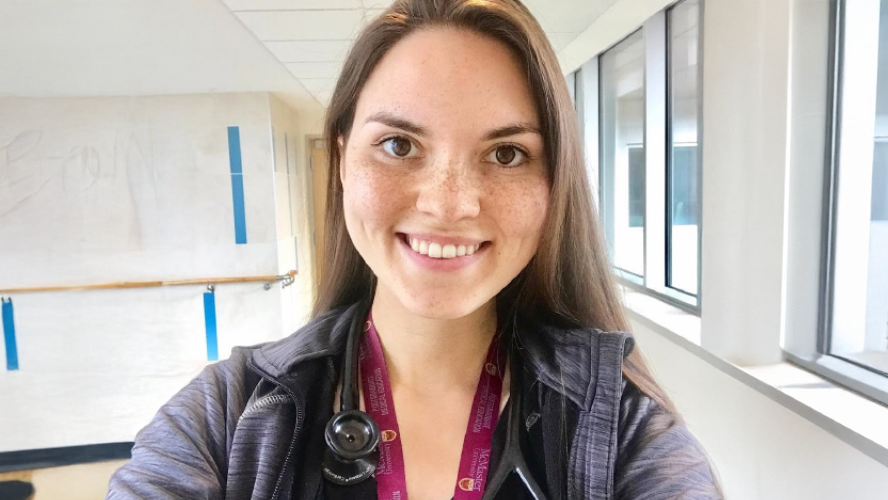
From combating online misinformation to redesigning workflows and embracing AI, Dr. Siobhan Deshauer explains the challenges facing today’s physicians — and the collective solutions needed to build a more resilient, equitable health-care system.

What are the biggest challenges physicians face today, and how are these shaping the future of medical practice?
One of the biggest challenges facing physicians today is the sheer volume of medical misinformation spreading on social media, and it’s already reshaping how we practise. Studies show that false or oversimplified medical claims tend to be more engaging and spread more quickly online than careful, evidence-based information. People really resonate with bold, confident statements like “X cures cancer” or “Y is a hoax”. In contrast, when we acknowledge the nuance and uncertainty of medical science, people can find these answers less satisfying. The result is that some people come to trust unqualified online influencers more than public health organizations, and sometimes even more than their own physicians. This can place real strain on the physician-patient relationship, especially as we guide patients through high-stakes decisions. Going forward, this reality means that being a good doctor will increasingly require being an expert communicator, particularly in situations where there are no easy answers. We need strategies to address misinformation directly and respectfully, to help patients sort through what they see online, and to explain complex evidence in clear, accessible language. In many ways, the future of medical practice will depend not only on the science we have, but on how well we can earn and keep our patients’ trust.
How can institutions better support physicians’ mental health, workload balance, and resilience?
One of the most important ways institutions can support physician mental health is by tackling administrative burden. Physicians are trained to diagnose, treat, and build relationships with patients, but a growing share of our day is spent writing notes, clicking boxes and filling out forms. I’ve seen first-hand how building allied health teams focussed on specific administrative tasks can make a big difference. But perhaps an even better strategy would be eliminating low-value work entirely. For example, the Canadian Medical Association is currently advocating to eliminate sick notes for minor, short-term illnesses. These visits rarely benefit the patient directly and may even cause harm by spreading illness to vulnerable populations. Yet, every year, physicians across Canada spend over 1.5 million hours on sick notes (the equivalent of 6 million patient visits!). The key here is protecting doctors’ time for actual patient care. This not only supports mental health and resilience for physicians, it has the potential to improve access to care for patients across Canada.
How can technology – like telehealth and AI – help address inefficiencies and improve both physician and patient experiences?
When I prepare to see a new patient, it is critical to understand their medical history. But this is easier said than done. Ontario still does not have a unified electronic medical record. This means that lab results, imaging reports and physician’s notes are scattered across several electronic systems. This makes gathering all that important information frustrating and inefficient… sometimes even impossible.
This is just one area where I think AI could make a meaningful difference. Instead of manually searching through multiple platforms, AI could rapidly bring all this information together, providing physicians a clear and accurate summary of their patient’s medical history, no matter where they are in Ontario. There are certainly some hurdles that need to be overcome in terms of security, privacy and the potential for AI “hallucinations”. But when these issues are addressed, my hope is that it will ultimately help us spend more face-to-face time with patients and family members, rather than behind a screen hunting for data.
What changes in medical education are needed to prepare doctors for a more digital future?
I believe medical education needs to focus on building strong digital literacy: The skills to critically evaluate new technologies, including AI, and integrate them safely into patient care. To put this in context, when I graduated medical school in 2017, many hospitals were still using handwritten notes and paper prescriptions. As I progressed through my training, electronic medical records and communication platforms transformed how we deliver care. Now, it’s changing again in the age of AI. The point is, the digital landscape in health care evolves so quickly that students cannot just be trained on whichever system happens to be in use today. They need to learn how to judge whether a tool gives an accurate output, recognize its limitations and biases and decide how, or whether, to use it in a real clinical encounter.
What’s your vision for the future of medicine in Canada, and how can collaboration build a sustainable, equitable system?
My hope is that Canada moves toward a future where the health of our population is treated as a shared priority, not just within hospitals and clinics, but across society as a whole. Health is shaped long before I meet someone in the clinic. It’s influenced by the neighbourhoods we design, the housing people can access, the food they can afford, and the supports available in their communities. We can’t expect a 15-minute medical appointment to solve problems that are rooted in broader social conditions. A sustainable and equitable health-care system will require collaboration. Physicians play a role, but so do policymakers, community leaders, and patients themselves. By breaking down silos and working together, we can build a system that supports Canadians not only when they are sick, but throughout their lives.
