
David Stankiewicz
Vice President of Digital Transformation and Chief Information and Privacy Officer, William Osler Health System

Sharon MacSween
Associate Vice President of Health Information System,
William Osler Health System

Dr. Frank Martino
President & CEO, William Osler Health System
As William Osler Health System (Osler) implements Epic, it’ll be among the first Ontario hospitals to use AI to support care teams and improve patient care.
As artificial intelligence (AI) becomes more widely adopted to augment excellence in health care, hospitals are focused on leveraging AI tools to help improve care for patients. For William Osler Health System (Osler), that work is accelerating ahead of a major milestone, supported by strong safeguards and oversight. In fall 2026, the organization will implement the Epic electronic medical record, one of the world’s leading digital health platforms. As part of this clinical digital transformation, Osler will be one of the first hospital systems in Ontario to embed AI tools directly into the system from the start to help support patient care.
“Epic is widely recognized as a global leader in electronic health records,” says David Stankiewicz, Vice President of Digital Transformation and Chief Information and Privacy Officer at William Osler Health System. “Leveraging its AI capabilities as we design how care is delivered is a game-changing approach. It will help clinicians with real-time decision-making, enhance quality of care and patient safety, and boost patient and family engagement in care.”
With its new system, Osler has a unique opportunity to integrate AI tools during the planning process, rather than retrofitting the platform later. This allows teams to thoughtfully assess where AI is most helpful and ensure it reflects the needs of patients, clinicians, and the diverse communities Osler serves.
Focusing on patient safety
Osler is taking a thoughtful, safety-first approach to introducing AI by developing guiding principles to ensure that AI tools are used transparently, responsibly, and always in support of people-centred care. It’s also being implemented within specific AI frameworks and legislation that are shaping the regulatory climate for best practice use.
Leveraging (…) AI capabilities as we design how care is delivered is a game-changing approach.

Importantly, AI-enabled tools within Epic do not make decisions on their own. Care decisions always rest with clinicians, but AI adds an additional layer of insight to support clinical judgment. The transition to Epic and its integrated suite of AI-enabled tools is a substantial change for clinicians across Osler’s five sites and is focused on enhancing patient care and experience. As a result, the health information system renewal has been intentionally designed as a clinician-led initiative, supported by digital and information systems teams.
“More than 700 staff and physicians across Osler have helped design how the new system will work in our hospitals every day. They’ve looked at opportunities to use AI to enhance patient safety and streamline care coordination,” says Sharon MacSween, Associate Vice President of Health Information System at William Osler Health System. “Our teams are now shaping the system to work alongside clinicians to better support care for patients.”
What this means for patients
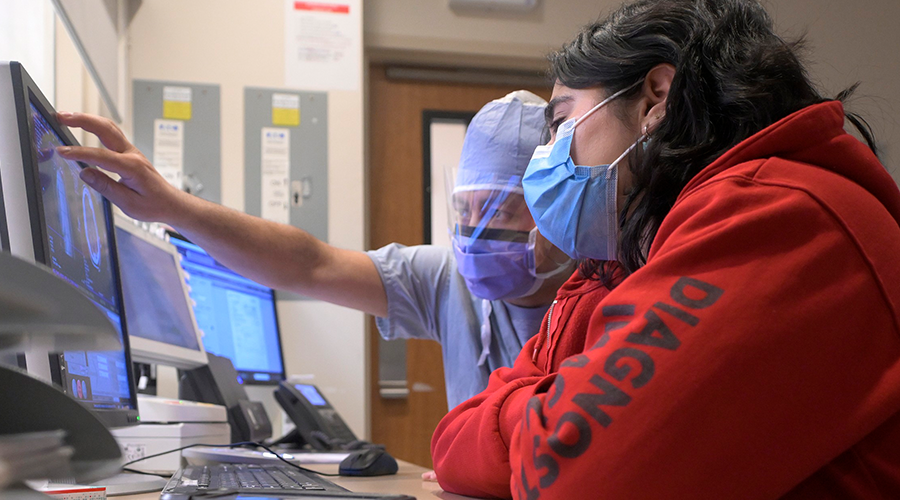
In practice, AI-enabled tools will help clinicians efficiently identify the most important information while they’re providing care. In areas such as the emergency department, this supports faster decisions, smoother handoffs between care teams, and clearer communication. Patients can also spend less time waiting or repeating their personal health history and can feel more confident that their important information follows them through their hospital journey.
Preparing health teams for the change
Introducing a new hospital information system is one of the most significant changes yet to how care is delivered across Osler’s hospital system.
“We have a comprehensive training and support program for Osler teams to understand how AI-enabled tools within Epic will augment patient care,” says Stankiewicz. “This consists of role-based training and education to ensure staff and physicians learn what’s most relevant to their practice.”
Ongoing monitoring
Once the new electronic health record goes live, Osler will closely monitor safety, quality, and operational indicators to help teams use the system successfully and make ongoing improvements over time.
“This transformation will enable us to deliver even better care to patients and families,” says Dr. Frank Martino, President and CEO at William Osler Health System. “Our teams will have improved tools to respond to the needs of our communities, free up more time for people-centred care, and support learners and researchers at our hospitals to advance the future of health care.”
This article was made possible with support from William Osler Health System.