

Candice Ashley Pollack
CEO, ResearchNB
In New Brunswick, big ideas don’t need a big address.
1. Underwater breathing was born here – Saint John
Long before Jacques Cousteau made scuba diving famous, James Elliott and Alexander McAvity patented a self-contained underwater breathing apparatus in 1839. A world-changing invention for anyone who’s ever strapped on a (SCUBA) tank.
2. The potato that launched the french fry revolution – Florenceville
McCain Foods, responsible for one in four fries eaten worldwide, needed a better potato. NB scientists bred the Shepody, now grown worldwide. Your fries likely started here.
3. Canada’s forests are being sent to space – Fredericton
Canada’s only national tree seed bank preserves the genetic diversity of 250+ tree species against climate change and extinction. In 2026, seeds from five Canadian trees hitched a ride on NASA’s Artemis II lunar mission. The ultimate backup plan.
4. Saving the bees of the ocean from extinction – Grand Manan
Without salmon, aquatic ecosystems collapse, just like bees. New Brunswick built the world’s first wild salmon conservation farm and wild salmon are (finally) coming home.
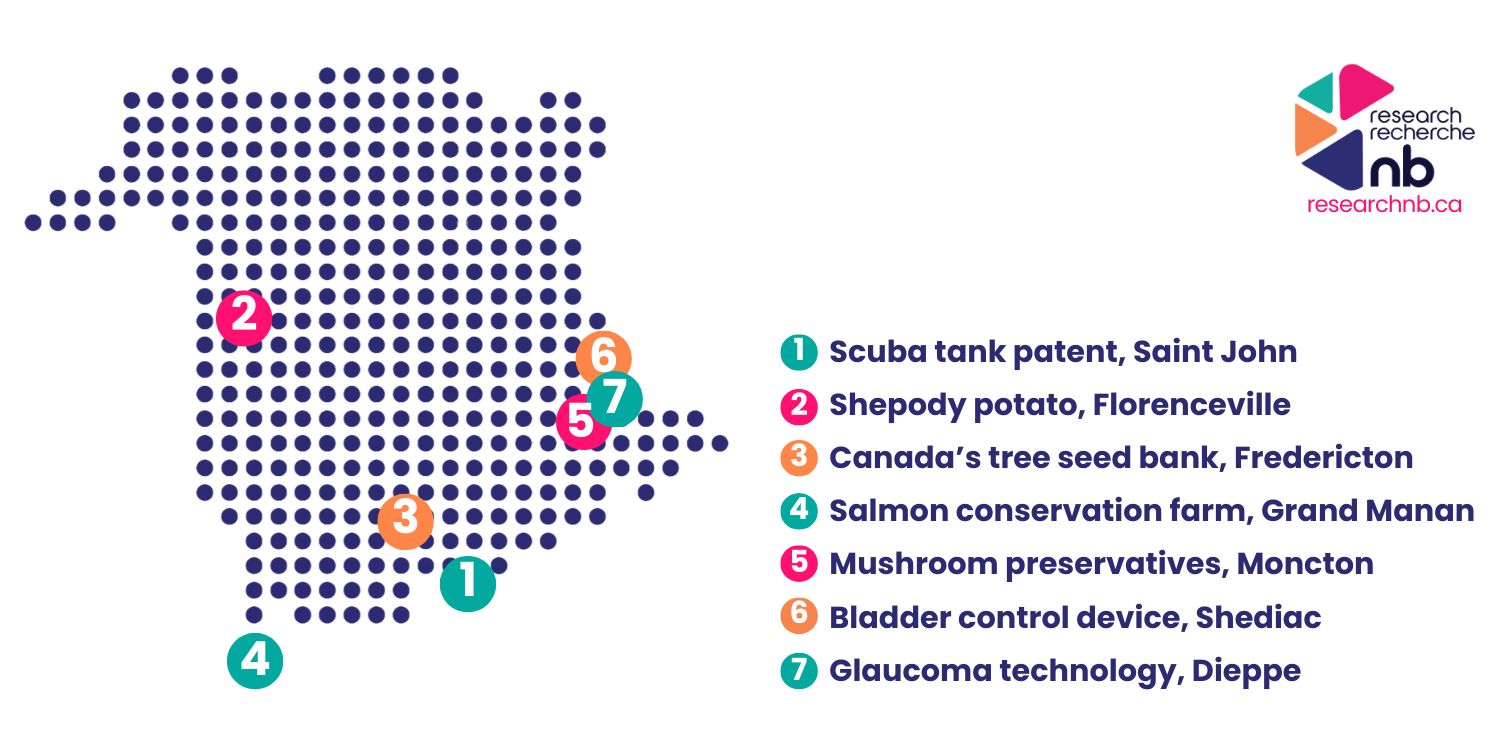
5. The mushroom hiding in (and preserving) your groceries – Moncton
Chinova Bioworks extracts a natural fibre from white button mushrooms and turns it into a food preservative, used in beverages, dairy, sauces, and plant-based products worldwide. Your next snack may already have NB in it.
6. The device that prevents peeing yourself, no laundry required – Shediac
One in three women experience bladder leaks. Uresta, developed by a New Brunswick urogynecologist, stops the problem before it starts. No drugs, no surgery, no midnight laundry runs.
7. The NB device with sights on ending glaucoma – Dieppe
Glaucoma is the leading cause of irreversible blindness worldwide, yet effective treatment remains out of reach for millions. Hexiris is developing minimally invasive devices to bring glaucoma care out of the operating room and into the doctor’s office.
See how research continues to fuel innovation in New Brunswick.