

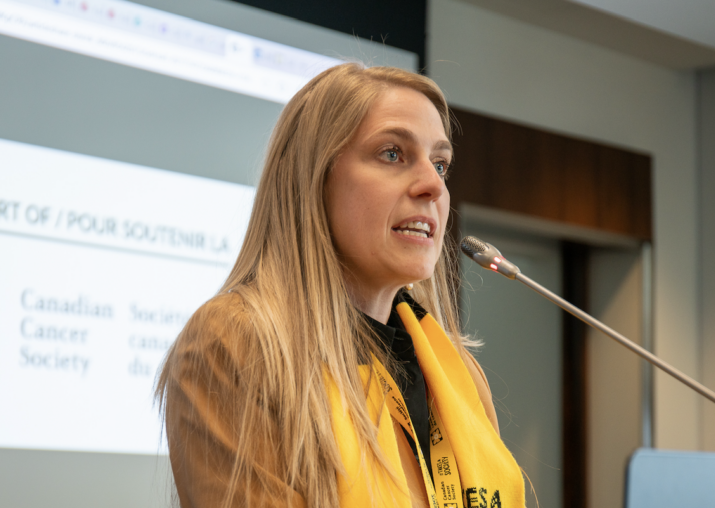
Helena Sonea
Director of Advocacy, Canadian Cancer Society
This Canadian charity is highlighting the role the government must play in developing a stronger, improved clinical trials ecosystem across Canada.
Few words change someone’s life like hearing “you’ve got cancer”. It’s a confusing, overwhelming, emotional time in any person’s life and amid this uncertainty the one thing everyone deserves is access to the best care and treatments available.
In medicine, clinical trials are critical to advancing patient care and paving the way for better, improved treatments.
“Clinical trials represent how scientists take promising ideas from the lab like a molecule or new test and turn it into real world solutions that support patients,” says Helena Sonea, Director of Advocacy for Canadian Cancer Society.
By participating in a clinical trial, patients are given the chance to explore new care options instead of or in addition to standard treatment. They also play an important role in furthering research that will improve outcomes for the wider patient body. How quickly patients in each country access these new treatment options however, is a separate and increasingly relevant issue, especially in Canada.
Patients suffer lengthy Canadian bureaucratic processes
Clinical trials often take a long time to launch due to the complex processes of protocol development, regulatory approvals, site selection, and participant recruitment.
“Clinical trials aren’t abstract systems,” explains Judy Needham, cancer survivor and previous chair of the Patient Representative Committee for Canadian Cancer Trials Group, “they translate directly into whether a patient has a viable option when they need it.”
In Canada, a notoriously bureaucratic system has shaped a slow, inefficient clinical trials environment, contributing to Canada’s reputation as a less ideal location for those looking to execute such trials. Lengthy regulatory processes, multiple ethics and legal reviews make the journey to simply starting a Canadian-based clinical trial a tedious process. In turn, clinical trials often take place in better-resourced countries like the United States. While Canadians may eventually benefit from the resulting treatments, by not having access to local trials, Canada has become reliant on internationally-developed treatments without experiencing any economic benefits associated with developing them. It also means patients, who may have qualified to participate in what could have been life-saving treatment, lose this option.
After exploring clinical trial options for her brother-in-law, Judy herself was shocked not only by the inequity in access between Canada and other countries, but within the country itself; “provincial barriers also prevent patients from participating in trials across Canada.”
A roadmap to improved access
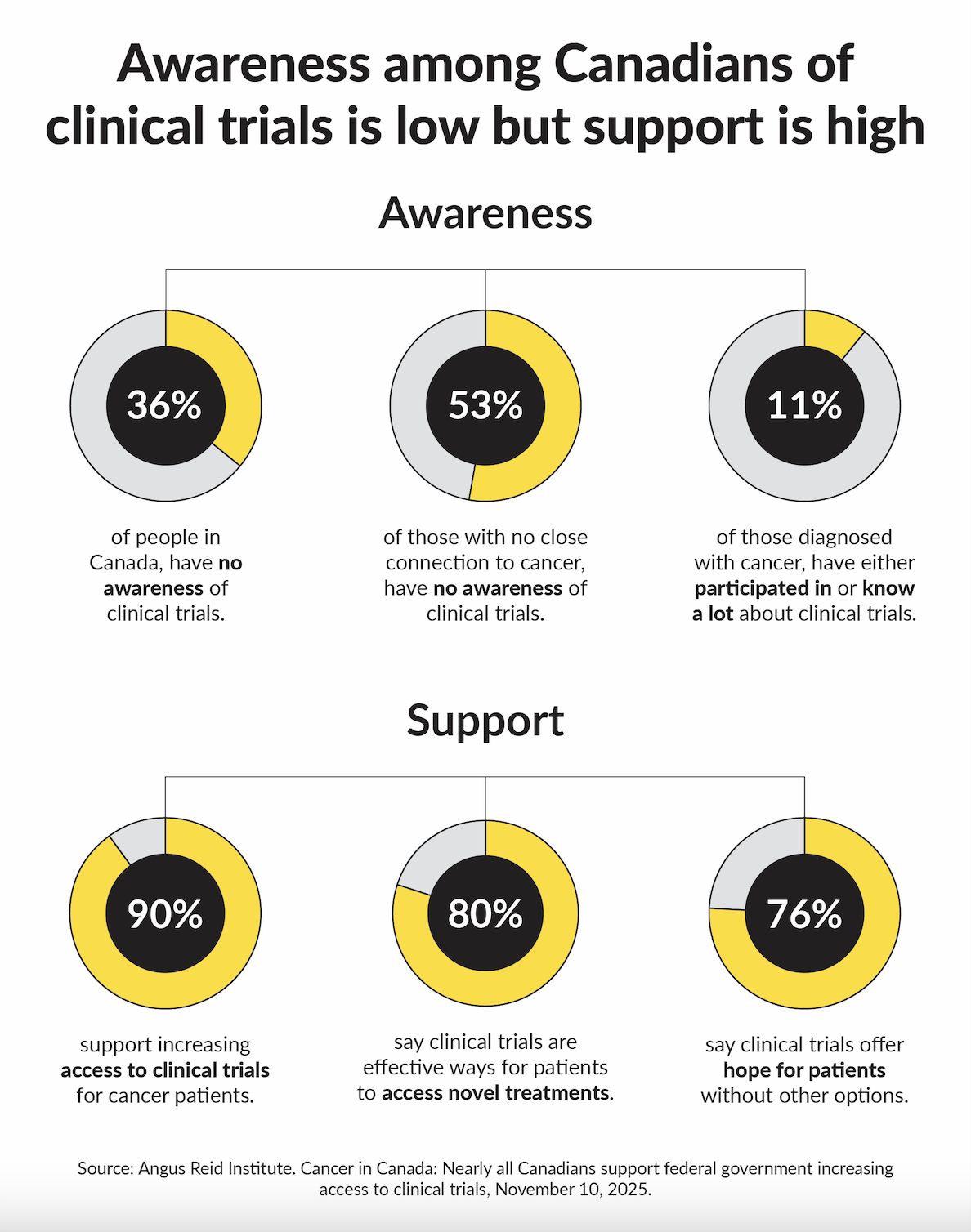
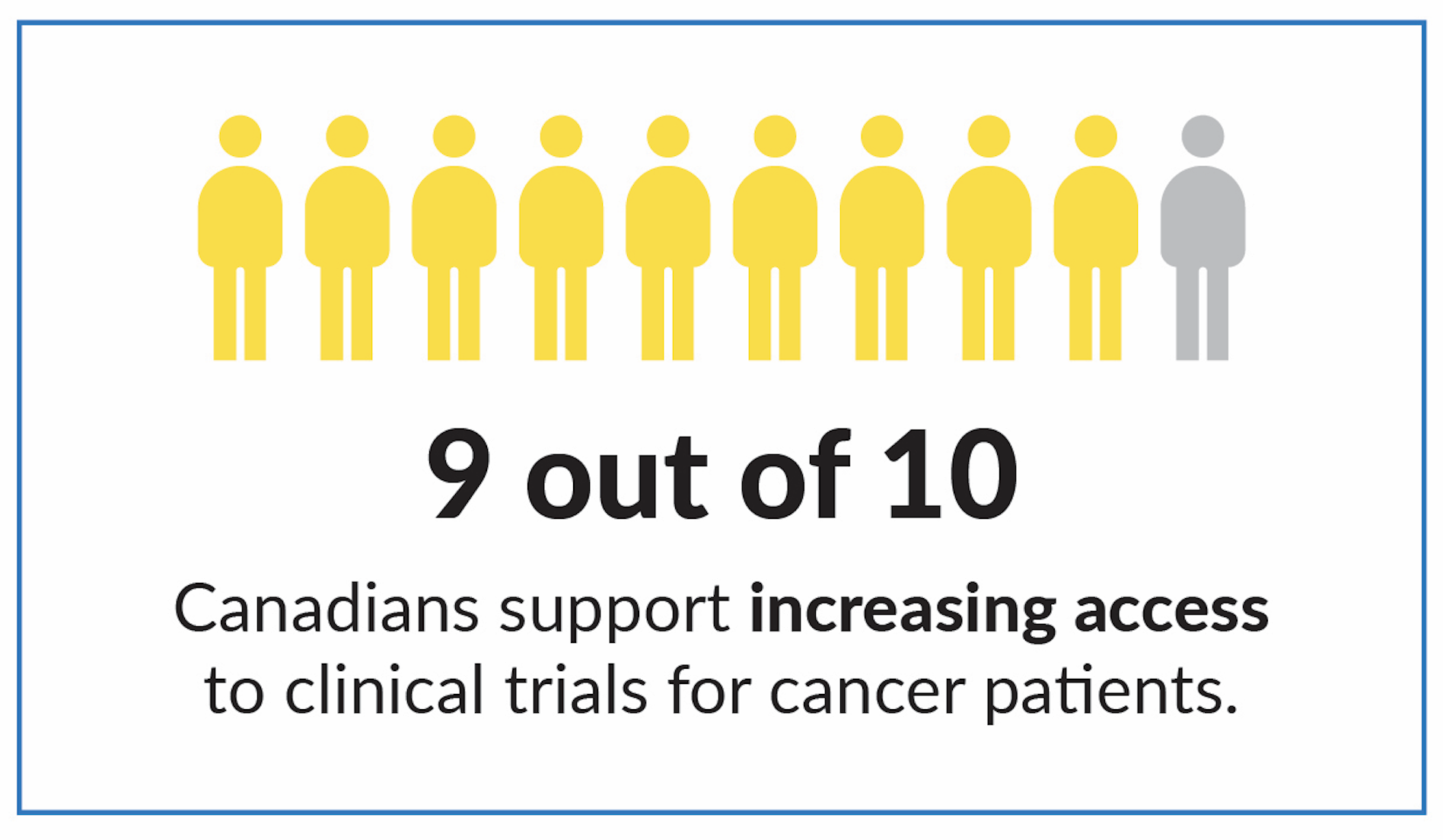
The Canadian Cancer Society is determined to change this. The Clinical Trials Action Plan (CTAP) aspires to transform patient care in Canada by creating a clear blueprint on the government’s role in better supporting clinical trials, ultimately increasing awareness and access for patients across the country.
Engaging researchers, scientists, policymakers and people with lived cancer experience, CTAP aims to double the percentage of Canadians enrolled in cancer clinical trials by 2035. The plan also outlines how Canada can become the fastest country to launch a clinical trial, which would improve the number of researchers interested in executing local trials. Specifically, it highlights the government’s role in creating a better, more streamlined national process that would support a faster trajectory to launching a clinical trial, making Canada a more desirable location for these types of medical investments.
We want to bring more healthcare innovation to Canadian patients; medicines developed by Canadians, for Canadians, within our borders.
“We need a harmonized clinical trials environment supported by federal and provincial legislation,” Helena says. “Our goal is to encourage the federal government to develop the national benchmark to launch a clinical trial in 75 days.”
The government’s role moving forward
Currently, onerous administrative processes led by both federal and provincial bodies make the journey to launching a Canadian clinical trial hundreds of days, deterring interested researchers. Through government investment and leadership, CTAP illustrates a system where access to clinical trials is the standard of care rather than the exception. By highlighting the need for streamlined, master processes led at a federal level, Canada can remove bureaucratic barriers and bring medical innovation to Canadian soil.
In a time when sovereignty is the word on every politician’s lips, a more cohesive clinical trials ‘ecosystem’ seems like an obvious investment in a Canada-first research industry. “We want to bring more healthcare innovation to Canadian patients; medicines developed by Canadians, for Canadians, within our borders,” Helena says.
It’s a small change that will have drastic impacts, not only improving patient options but highlighting Canada as a world leader in medical innovation. “The plan CCS has pulled together visualizes a means to an improved clinical trials system in Canada. With government funding, leadership and continued collaboration, we have an opportunity to make that vision a reality, which translates into meaningful access and benefits for patients and families across Canada,” Judy finishes.
Click here to learn more about the Canadian Cancer Society and how you can support the Clinical Trials Action Plan.