

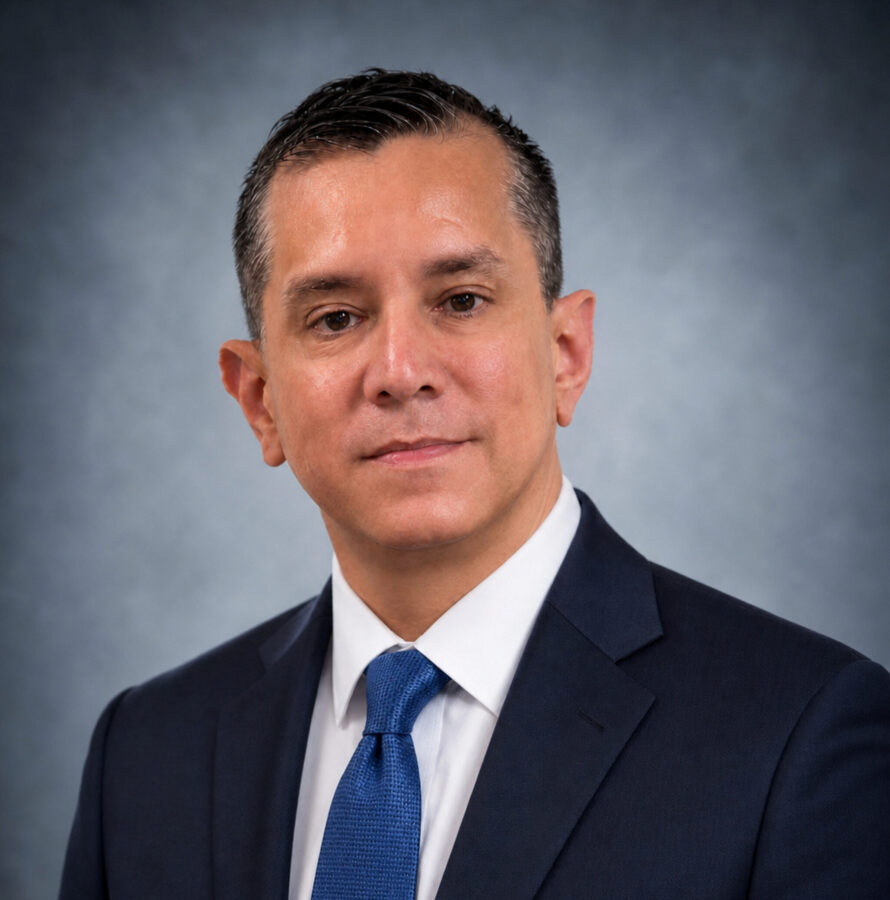
Dr. Hans Katzberg
Neurologist and Professor of Neurology at the University of Toronto

Homira Osman
Vice-President of Research, Public Policy and Programs at Muscular Dystrophy Canada
Earlier diagnosis, specialized care, investment in research, and access to innovative medicines can improve outcomes for Canadians living with gMG and CIDP.
Generalized myasthenia gravis (gMG) and chronic inflammatory demyelinating polyneuropathy (CIDP) are rare autoimmune neuromuscular conditions that can have life-altering impacts.
gMG affects the neuromuscular junction, which is the connection between nerves and muscles. During an autoimmune attack, antibodies are directed against the junction, disrupting the communication between nerves and muscles and leading to muscle weakness.
“If the ocular muscles are affected, people may experience double vision or droopy eyelids,” says Dr. Hans Katzberg, a neurologist and professor of neurology at the University of Toronto. “The muscles involved with swallowing or speaking can be affected, as can the extremity and trunk muscles. In the most serious scenario, the breathing muscles can be affected and it can be life-threatening.”
In CIDP, it’s the myelin sheath (the nerves’ protective covering) that is attacked. CIDP can cause patients to experience muscle weakness, numbness, and mobility issues.
Why early diagnosis matters
Many people living with gMG and CIDP experience delays before receiving a diagnosis. “The signs and symptoms are similar to those of other neurological conditions,” notes Dr. Katzberg.
“Oftentimes there’s a diagnostic odyssey,” says Homira Osman, Vice-President of Research, Public Policy and Programs at Muscular Dystrophy Canada. “Many patients spend months to years seeing multiple specialists, receiving misdiagnoses, or being told their symptoms are psychological.”
gMG and CIDP are treatable conditions, and we can often make a great difference in quality of life.
Access to neurologists with expertise in these rare conditions and the specialized nerve testing needed to diagnose them can be a challenge, Dr. Katzberg notes.
Early diagnosis for both conditions is critical because it allows for earlier treatment, which can slow or even halt disease progression.
“With gMG, the earlier the treatment, the better the chances of controlling the disease early on,” says Dr. Katzberg. “And the longer you go untreated with CIDP, the more long-term nerve damage can occur.”
Living beyond the diagnosis
“Our goal with treatment is always maximal functioning for the person living with the condition and also the least amount of side effects or burden from the treatment itself,” says Dr. Katzberg. “The encouraging part is that gMG and CIDP are treatable conditions, and we can often make a great difference in quality of life.”
Multidisciplinary care plays a key role in gMG and CIDP management. Depending on the condition and the individual, a care team might include neurologists, physiotherapists, occupational therapists, speech-language pathologists, and other specialists.
Patient education and advocacy are also important in supporting quality of life for people living with gMG and CIDP. “Ongoing support from Muscular Dystrophy Canada can help people feel less isolated, connect them with specialists sooner, and support independence and quality of life,” says Osman.
Shaping the future of care
Research and innovation are leading to new treatment options that can help improve outcomes for people living with these conditions.
“New classes of medications have been tried in gMG and are now being applied to CIDP, including Fc receptor inhibitor technology,” says Dr. Katzberg.
One of these Fc receptor blockers, which reduce harmful antibodies, is an innovative treatment developed for CIDP.
It is the first new treatment approved for CIDP in roughly 30 years and is the only approved alternative to CIDP’s traditional treatment, intravenous immunoglobulin (IVIG).
“It’s very helpful to have this non-blood product option for CIDP because blood products have their own issues,” says Dr. Katzberg. “People can have reactions. You have to collect blood from healthy donors. There could be supply issues. This is a great alternative option.”
Ensuring Canadians benefit from innovation
Despite these innovations, timely and equitable access remains a challenge.
“Approval doesn’t mean access,” says Osman.
We just need to take the innovation that we’ve moved forward and get it into the hands of patients.
Ensuring that Canadians benefit from these advances will require collaboration among clinicians, researchers, patient organizations, and policymakers, as well as timely public reimbursement for innovative therapies. Earlier diagnosis, multidisciplinary care, and ongoing patient advocacy can all contribute to a better quality of life for people living with gMG and CIDP.
“The future is bright,” says Dr. Katzberg. “We have a lot more options. We just need to take the innovation that we’ve moved forward and get it into the hands of patients.”
This article was made possible with support from argenx.