


Diaper rash is common but preventable. Here’s what causes it — and how a thoughtful diaper care routine can help protect your baby’s delicate skin.
Few parenting concerns appear as suddenly — or as frequently — as diaper rash. Studies suggest most babies experience it at some point in their first two years. While it’s usually mild and resolves within a few days, it causes discomfort and leaves parents wondering what triggered it and how to prevent it from returning.
Understanding diaper rash starts with understanding infant skin.
Newborn skin is thinner and more permeable than adult skin, and its protective barrier — which keeps moisture in and irritants out — is still developing. Research published in the Journal of Clinical and Aesthetic Dermatology shows that prolonged exposure to moisture can disrupt this barrier, increasing friction and irritation. In the warm, humid diaper area, those effects can be amplified.

What causes diaper rash?
The primary driver of diaper rash is overhydration of the skin. When urine and stool remain in contact with the skin for prolonged periods of time, they alter its pH and weaken its structural integrity. Digestive enzymes in stool — particularly after the introduction of solid foods — can further irritate sensitive skin.
Diaper rash may be common — but with a preventive approach, it doesn’t have to be inevitable.
Diaper rash usually appears as redness or inflammation on the skin in and around the diaper area. In mild cases, the skin may look pink and irritated on lighter skin tones, or on deeper skin tones, dark brown, purple or gray-like patches. More severe rashes or infections can involve raised bumps, peeling skin, or areas that feel warm and tender.
Friction from movement, sensitivity to certain materials, and infrequent diaper changes can make diaper rash more uncomfortable for your baby. Even cleansing practices matter: wipes that are heavily fragranced or not pH-balanced may also contribute to irritation in babies with sensitive skin.
In short, diaper rash is rarely caused by one factor alone. It is typically the result of moisture, friction, pH imbalance, and skin vulnerability interacting over time.
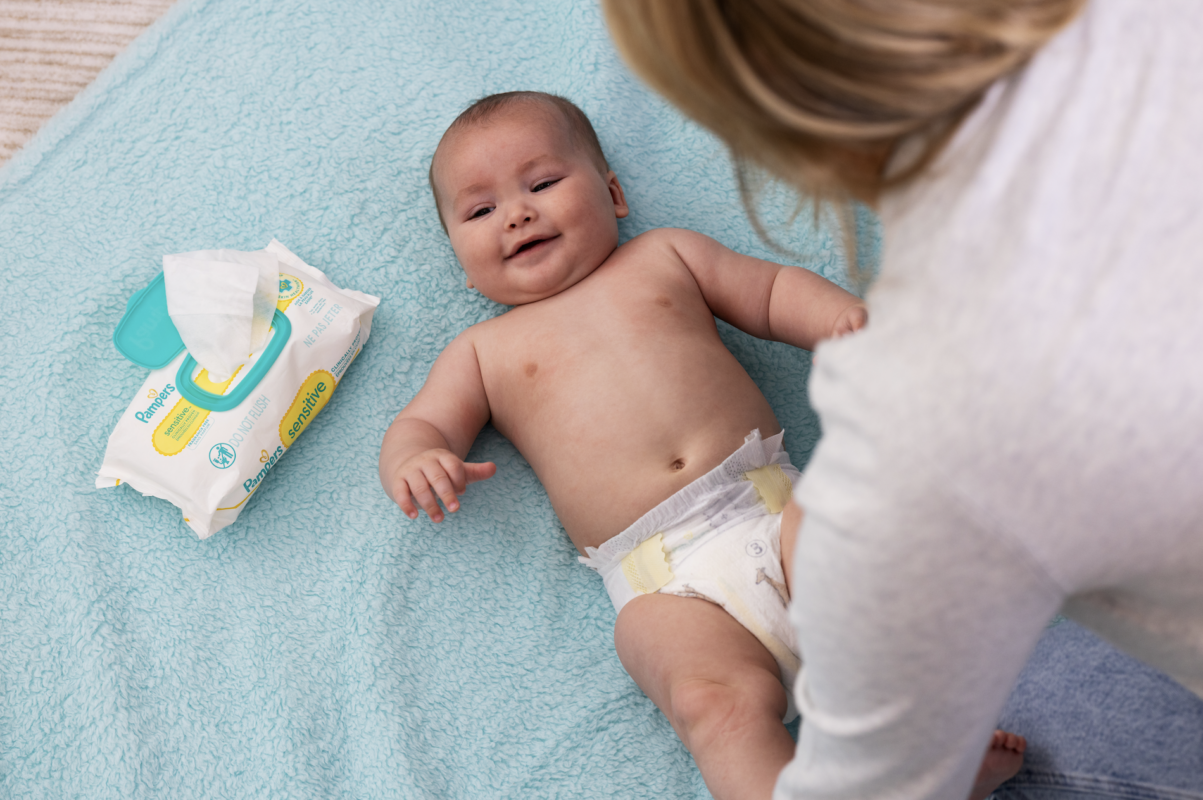
Preventing diaper rash starts with the right routine
Preventing diaper rash starts with protecting the skin’s barrier before irritation begins.
Frequent diaper changes reduce prolonged exposure to wetness, and highly absorbent diapers that pull moisture away from the skin help limit overhydration and friction. Choosing a diaper that fits well and stays in place helps reduce gaps and rubbing — which is particularly important as babies begin rolling, crawling, and walking.
Cleansing is equally important. Fragrance-free wipes formulated for sensitive skin can help remove irritants while maintaining a healthy skin pH. Maintaining a slightly acidic balance supports the skin barrier and reduces irritation.
Clinical research supports this multi-step approach. A consistent diaper care regimen that combines effective absorbency with gentle, pH-conscious cleansing has been shown to improve skin condition and reduce irritation in newborns.
Supporting skin from newborn to toddler
To build an effective diaper care routine, product design matters. Pampers is the #1 pediatrician-recommended brand (based on a 2025 survey of U.S. and Canadian pediatricians) and has diaper solutions to help protect children’s skin throughout their first three years of life.

For newborns, Pampers Swaddlers are designed with an absorbent KeepDry™ Liner that locks wetness and mess away to help maintain dry, healthy skin. They are dermatologist-tested, hypoallergenic, and free of fragrance, elemental chlorine, parabens, and latex* (*no natural rubber), making them suitable for delicate newborn skin.
As babies become more mobile, Pampers Swaddlers 360° diaper pants feature a 360° stretchy waistband and ultrasoft absorbent layers with Dual-Leak Guard Barriers to help protect where leaks happen most — offering up to 100% leakproof skin protection during active stages. They also feature EZ-Off tabs to help with easy changes.
For day one onwards, Pampers Sensitive Wipes are fragrance-free and designed for extra-sensitive skin, helping restore and maintain a healthy pH balance as part of a gentle cleansing routine. And as toddlers move into potty training, Pampers Easy Ups provide a soft, stretchy waistband and an ultra-absorbent core with a LockAway Channel that provides up to 100% leakproof protection to help keep skin dry while supporting growing independence.
Diaper rash may be common — but with a preventive approach, it doesn’t have to be inevitable. By focusing on moisture control, gentle cleansing, proper fit, and dermatologist-tested materials, parents can help protect their baby’s skin through every stage of those critical first two years.
Learn more about protecting your baby’s skin and building an effective diaper care routine at pampers.ca.