Health Insight



Dr. Shaina Nensi
President, Ontario Association of Optometrists (OAO)
Optometrists say outdated OHIP funding prevents them from treating more urgent eye cases, pushing thousands of patients to emergency rooms.
When Melanie, a government worker in the Greater Toronto Area, started to experience redness and puffiness in her eyes and sensitivity to light, she was diagnosed with pink eye at a walk-in clinic. When treatment didn’t work, she visited her optometrist.
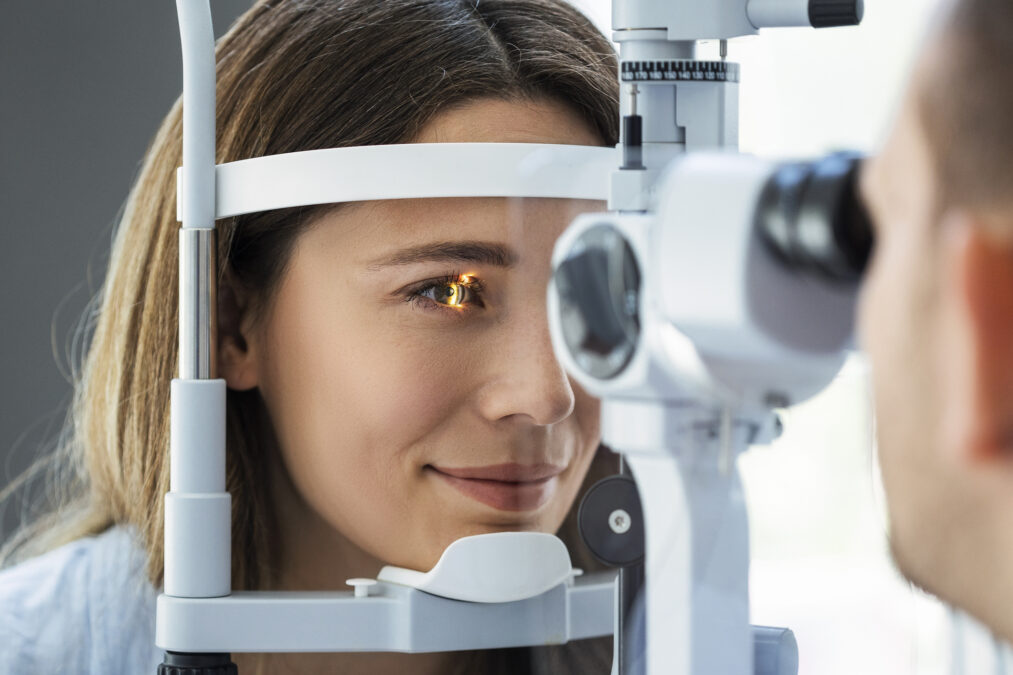
After her optometrist examined Melanie’s eyes with a specialized tool called a slit lamp, she diagnosed her with uveitis, a potentially vision-threatening condition. Her optometrist prescribed steroid and dilation eye drops and monitored her condition closely until it was resolved.
When Windsor resident, Alex, got a bit of debris in her eye after diving for home plate during a baseball game, she called her optometrist. The optometrist removed small pieces of gravel embedded in her eye, which prevented potential infection, scarring, or swelling. Alex was given eye drops to soothe her eye, and it healed over the next couple of days.
Optometrists are trained and ready to provide more care
This is the type of care Ontario’s optometrists are specially trained and ready to provide. This is why they are asking the provincial government to modernize OHIP funding to ensure Ontarians can receive timely, high-quality eye care close to home.
Dr. Shaina Nensi, president of the Ontario Association of Optometrists (OAO), said that optometrists have the skills and advanced diagnostic technology to detect disease early and treat urgent cases to relieve pressure on hospitals and family doctors. But outdated OHIP funding hasn’t kept pace with the true cost of care.
“Optometrists are not able to accommodate most acute or emergency cases, so we often have those patients needing to seek care in the ER, even though optometrists have the specialized training, equipment, and the clinics to be able to handle these cases, because there isn’t fair OHIP funding for those types of appointments,” Dr. Nensi says.
Current funding model is not sustainable for eye care
For example, while a family doctor may hold a few open appointment slots in their day to accommodate any urgent issues, optometrists aren’t holding these slots because they would be forced to do so at a financial loss.
“The funding model is more than 35 years old. Right now, it reimburses us at $25.15 for a partial visit for a child, for example,” Dr. Nensi says. “So, in my clinic in Toronto, that is a 15-minute or a half-hour appointment for me to see a child who has glitter pieces stuck in their eye that need to be removed one at a time. If I reserved that slot in my schedule and saw that patient for $25, I’m actually losing money. Because it costs quite a bit more to keep my doors open and pay my staff and pay my rent than what the reimbursement from OHIP is for that service.”
We have the capacity to take pressure off emergency rooms. With the right funding change, everyone benefits.
The OAO is working with the government to try and demonstrate why increasing funding for optometrists to take on emergency care and to create that capacity would benefit Ontarians and the healthcare system.

Improved funding could avoid 100,000 ER visits
“We are trying to show them that optometrists are a massive underused part of the primary care network, and that by modernizing the funding, the government can meet its own goals of reducing emergency room wait times and improving access,” Dr. Nensi says.
According to the OAO, conditions like eye infections, pink eye and corneal foreign bodies are frequent ER visits. A McMaster University-led study found that two-thirds of these types of ER visits could be managed by an optometrist.
This represents 100,000 patients who could be diverted from the ER. “It’s a better experience for the patient, who’s received faster care. They would also receive better care, because that study also showed that optometrists can more accurately diagnose these eye-threatening issues than general ER staff,” Dr. Nensi says. “So, it’s a better experience and better healthcare. And then patients are getting the right care, at the right time, from the right practitioner. That really does play into what the government is looking to do to improve healthcare at this time.”
9 in 10 Ontarians feel comfortable receiving optometry care
And Dr. Nensi says Ontario patients support this idea. A recent Ipsos poll commissioned by the OAO found Ontarians support the idea of expanding the role of optometrists. For example, nine in 10 Ontarians would feel comfortable receiving treatment for common eye conditions, such as infections, inflammation, or foreign body removal, from an optometrist.
Seven in 10 Ontarians support expanding the roles of optometrists as a strategy to reduce wait times for specialists. Nine in 10 Ontarians are comfortable with optometrists providing more in-office treatment, citing confidence in their level of training and continuing education.
“Ontarians do overwhelmingly trust their optometrists to do more,” Dr. Nensi says. “There really is opportunity for adoption of this model, because patients are willing. We have the capacity, and the government would welcome the relief that it would bring to the emergency room. So, it really is a win-win-win scenario if the government is willing to make this change.”
Optometrists complete a four-year postgraduate degree
Optometrists complete a four-year postgraduate degree. They provide acute and chronic eye care management and routine and preventative eye care. This includes routine vision checks, as well as diagnosis and treatment for issues such as sudden vision changes or painful or red eyes.
Right now, OHIP covers eye care by optometrists for children who are 19 and under, as well as for seniors, 65 and over. There is also coverage for adults between the ages of 20 and 64 who have conditions like glaucoma, macular degeneration, or diabetes. For these groups, coverage includes routine annual care, as well as follow-up or acute care. But even for patients with coverage, it can be difficult to get a same-day, urgent appointment because optometrists aren’t able to hold appointment slots.
“Optometrists want to see these patients. When somebody is calling the office say their child has craft glitter stuck in their eye, it really does weigh heavy on us to have to choose between prioritizing healthcare or prioritizing the sustainability of our practices,” Dr. Nensi says. “It’s not a good place that healthcare practitioners like to find themselves in. We really would like to be able to provide the care we’re trained and able to provide, and that would most benefit our patients.”
If you experience an eye concern, even one that feels urgent, contact your optometrist first and visit optom.on.ca to find a doctor near you or yourvisionmatters.ca to support modernizing eye care funding.