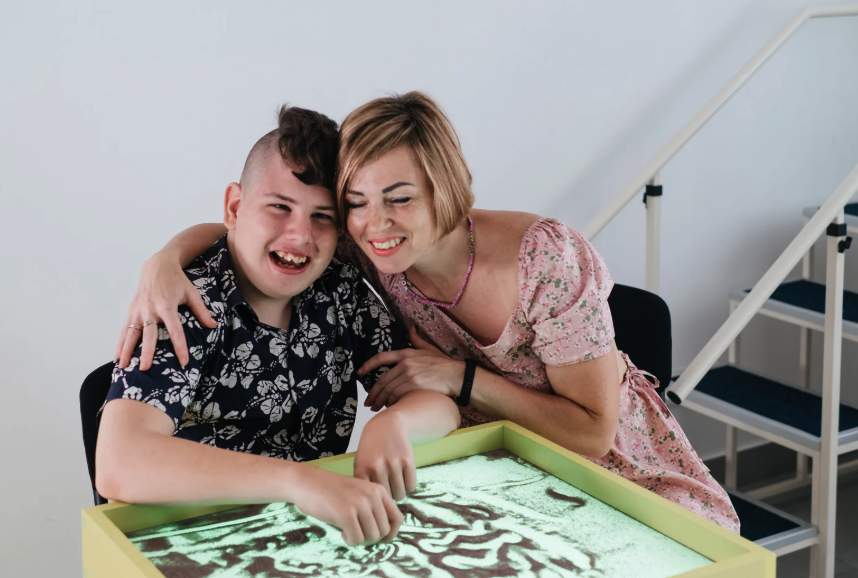

Kids Brain Health connects children and youth with neurodisabilities and their families to innovative solutions that help them reach their fullest potential.
Every child deserves the chance to grow, learn, and thrive. Yet for one in 10 children and youth living with a neurodisability, that chance is too often out of reach. Thousands are still waiting for timely diagnosis, effective interventions, and meaningful family support. Many families face years-long waitlists, gaps in essential services, and out-of-pocket costs of up to $80,000 a year. While there have been significant advances in research for children and youth living with neurodisabilities, these discoveries often do not reach the families who need them most.
Kids Brain Health (KBH+) believes Canada can do better. As a national platform connecting research, philanthropy, and innovation, KBH+ bridges this gap by helping to spread and scale proven supports for families and build a better future for children and youth.
Building better futures
From coast to coast to coast, KBH+ brings together researchers, clinicians, families, and policymakers—currently funding 24 transformative projects across all 10 provinces and one territory. Together, the KBH+ ecosystem is working to improve early identification, deliver effective interventions, and expand access to family supports—no matter where families live.
One of our most cutting-edge funded projects is Sound Sensitivity. Many children and youth living with autism find certain sounds painfully distressing, and Kids Brain Health Network (KBHN)-funded researchers at Simon Fraser University are tackling that challenge head-on.
With funding from KBHN and a grant to Kids Brain Health Foundation from TD Bank Group through the TD Ready Commitment, the project team developed an AI-powered app that allows users to turn down, mask, or remove specific sounds while leaving the rest of the soundscape intact. The system uses AI to monitor the environment for sounds the user finds distressing, then filters or masks them through the user’s headphones. It currently runs on a phone and is controlled through the app, so the user can choose which sounds to detect and decide how to handle each one. The device might filter out a school bell, for instance, while keeping the teacher’s voice clear.
Improving outcomes for kids, youth, and families
This is a major step forward over existing coping strategies, such as avoiding noisy places, leaving the room or covering one’s ears—all of which can get in the way of kids’ full participation in everyday life.
For Autistic advocate and inclusive education support worker Kenzie Curby, the impact is personal. “If I had had this in my younger years, it would have made things a lot easier for me. It would have made me able to stay in uncomfortable situations longer, because the device would make them comfortable.”
Over the past few years, the project team has worked closely with youth and families to strengthen the app, with planned improvements including support for a wider range of headphone brands and mobile operating systems. Their goal is simple yet powerful: to help kids and youth attend school, visit the grocery store or a restaurant, and participate more fully in daily life.
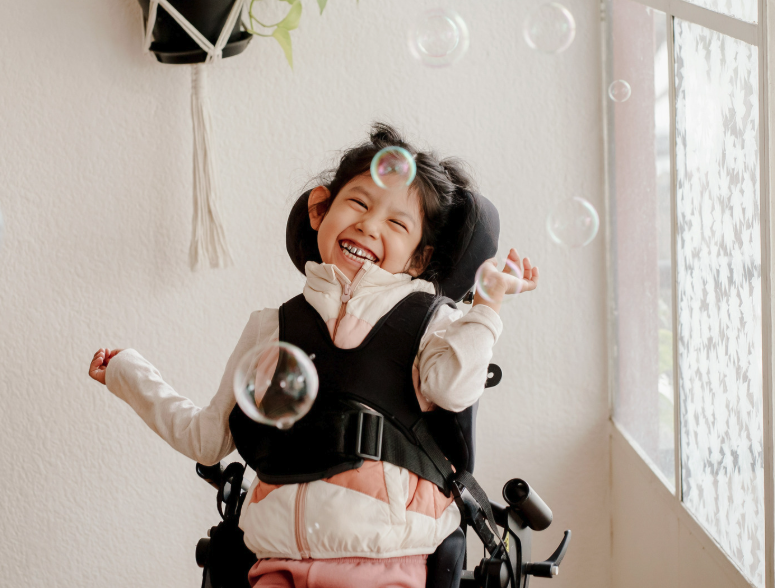
From evidence to everywhere: Scaling and sustaining innovations for kids and youth
Innovations like Sound Sensitivity do not happen in isolation—they grow when researchers, families, and partners connect, share, and build on each other’s work. That is what the KBH+ Conference 2026 is designed to make possible.
Join us in Calgary, Alberta, from October 18 to 21, as researchers, clinicians, people with lived experience, innovators, and policymakers gather to share breakthroughs, create new partnerships, and accelerate the solutions that children, youth, and families are counting on. Whether you are advancing research, shaping policy, investing in life-changing solutions or supporting families, this is where the future of pediatric disability takes shape, and we invite you to be part of the change.
Learn more at kidsbrainhealth.ca. Register for the KBH+ Conference 2026 at kidsbrainhealth.ca/kbh-conference-2026.