
Martine Elias
CEO, Myeloma Canada

Dr. Philip Kuruvilla
Recently Retired Hematologist
While patients with multiple myeloma are living longer than ever thanks to innovation, the challenge now is delivering care that fits into patients’ lives and today’s busy clinics over the long term.
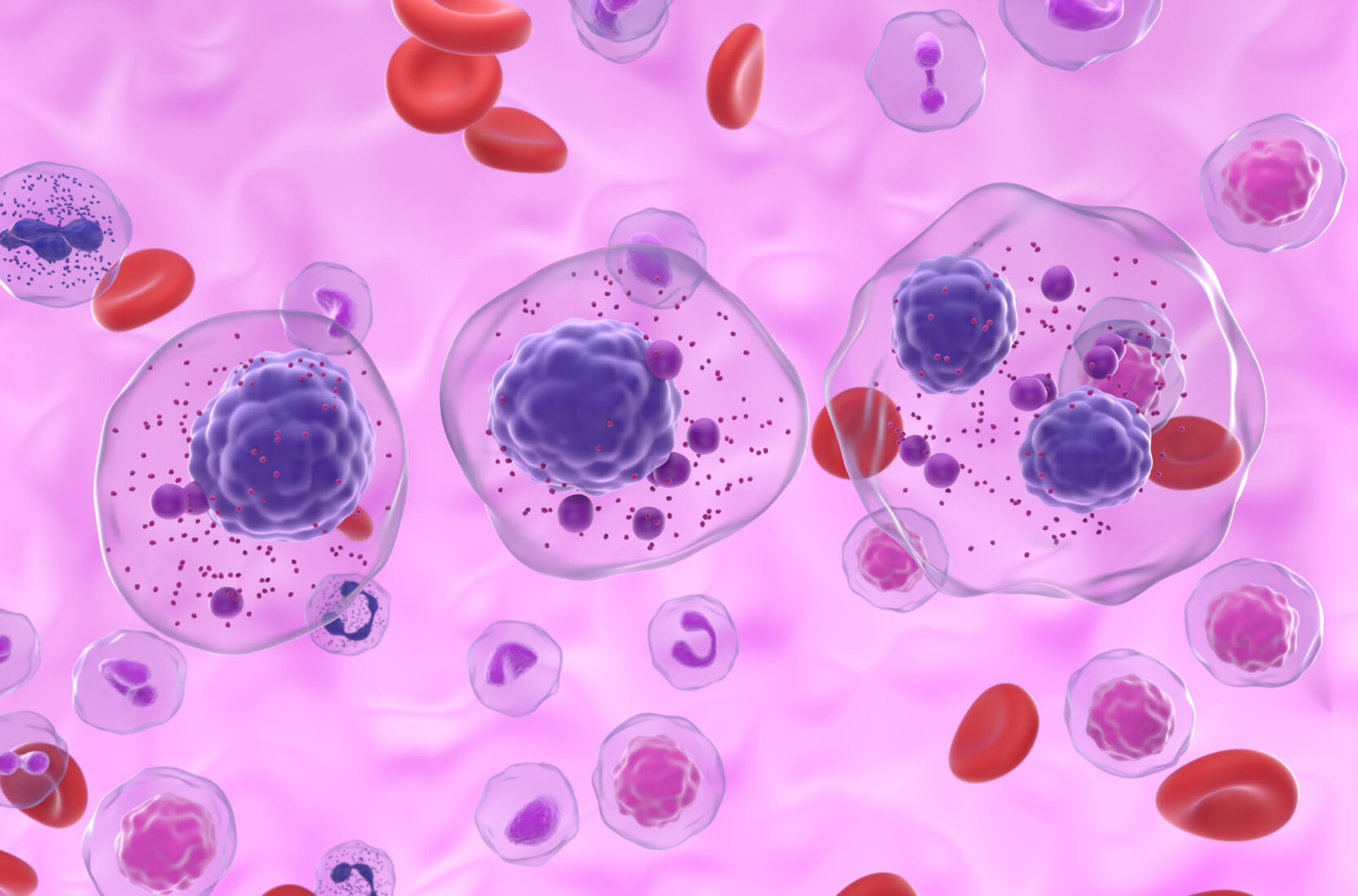
Multiple myeloma is a rare, complex blood cancer that affects the plasma cells, which produce antibodies for the immune system. It is typically a relapsing disease, meaning it can return after periods of remission and often requires new lines of therapy over time.
“The word ‘multiple’ is there because it can affect many organs,” says Dr. Philip Kuruvilla, a recently retired hematologist based in Toronto. “Multiple myeloma most commonly affects the bones and the kidneys, but really any organ can be affected.”
Multiple myeloma is often misunderstood or misdiagnosed because its signs and symptoms can overlap with those of other health conditions. “Patients often go months and sometimes years before they’re diagnosed,” says Martine Elias, CEO of Myeloma Canada.
Living with a complex blood cancer
A multiple myeloma diagnosis can affect every aspect of life, including work, family responsibilities, and daily routines.
“It’s a disease that, despite best efforts with available treatments, isn’t always well controlled and can be quite symptomatic,” says Dr. Kuruvilla. “There can be many issues, such as infections resulting from the effects of both myeloma and its treatment on the immune system, bone complications such as fractures and pain, and kidney failure. Managing treatment often requires ongoing vigilance to reduce the risk of complications and side effects, which can be stressful for patients and caregivers.” Despite advances, multiple myeloma remains incurable, and patients may eventually require additional treatment options as the disease progresses and becomes more difficult to treat.
The disease commonly cycles through remission and relapse, requiring ongoing monitoring that can be emotionally stressful. “It’s a very scary diagnosis,” says Elias. “Pain, fatigue, infections, and ongoing medical appointments, all affect independence and quality of life, and hospital visits can mean time away from work, as well as added financial stress for patients and their families.”
Dr. Kuruvilla also notes the burden treatment can place on patients. “Many of our myeloma treatments are given weekly and require a visit to the cancer centre or hospital, often over many months or years, which means frequent trips and repeated appointments just to receive each dose,” he says.
This can cause logistical challenges for older patients, caregivers, and people who live far from specialist cancer centres, including those in rural or remote communities, where long travel times, especially during the winter months, transportation costs and time away from work or family can add significantly to the burden of care.
Managing a long-term disease
Thanks to recent innovations, people with multiple myeloma are living much longer.
“When I started, myeloma was a highly lethal cancer with a short survival,” says Dr. Kuruvilla. “That has changed thanks to the impact of modern-day treatment. We now have several different types of therapies that can be very effective.”
Thanks to advances in treatment, multiple myeloma is increasingly being managed as a long-term condition, making it more important than ever to provide care that maintains quality of life and supports people in their everyday lives.
“Patients want to live well, not just live longer,” says Elias.
“Our goal is to treat the disease effectively while preserving patients’ quality of life,” adds Dr. Kuruvilla.
For people living with multiple myeloma, care that is more compatible with everyday life, coordinated support from families, healthcare teams and the broader community can make a meaningful difference in navigating this complex disease.
To learn more about multiple myeloma, visit myeloma.ca.
This article was made possible with support from GSK Canada.