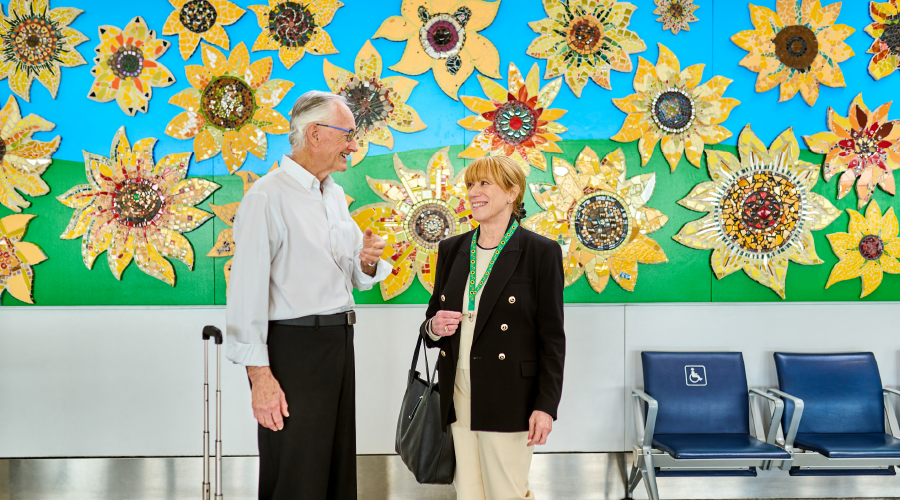

Toronto Pearson’s services and programs help Deaf and hard-of-hearing travellers, plus passengers with other disabilities, navigate the airport more comfortably.
Travelling can be stressful for anyone, from making sure you arrive at the airport on time and navigating security to finding your gate before boarding begins.
For people who are Deaf or hard-of-hearing, as well as other passengers with disabilities, airports can present additional barriers. These can include difficulty accessing information that’s delivered primarily through spoken announcements (such as gate changes and delays), communication barriers with airport staff, challenges navigating unfamiliar spaces, and difficulty accessing emergency information. Sensory factors can create additional barriers, intensified by airports’ crowds, bright lighting, noise, and constant activity, especially for neurodivergent travellers.
Accessibility goes beyond physical mobility. It also includes communication, information access, navigation, sensory needs, safety, and familiarity with the airport environment.
Toronto Pearson has taken great strides to ensure that accessibility is built into the airport experience. Over the past few years, it has worked with accessibility organizations and members of the disability community to identify barriers and improve the passenger journey. Its expanding array of services has made the airport more comfortable, accessible, and easier to navigate for both Deaf and hard-of-hearing passengers and travellers with other disabilities.
Supporting the Deaf community
There are a number of practical supports available at Toronto Pearson to make the airport experience more accessible for Deaf and hard-of-hearing travellers.
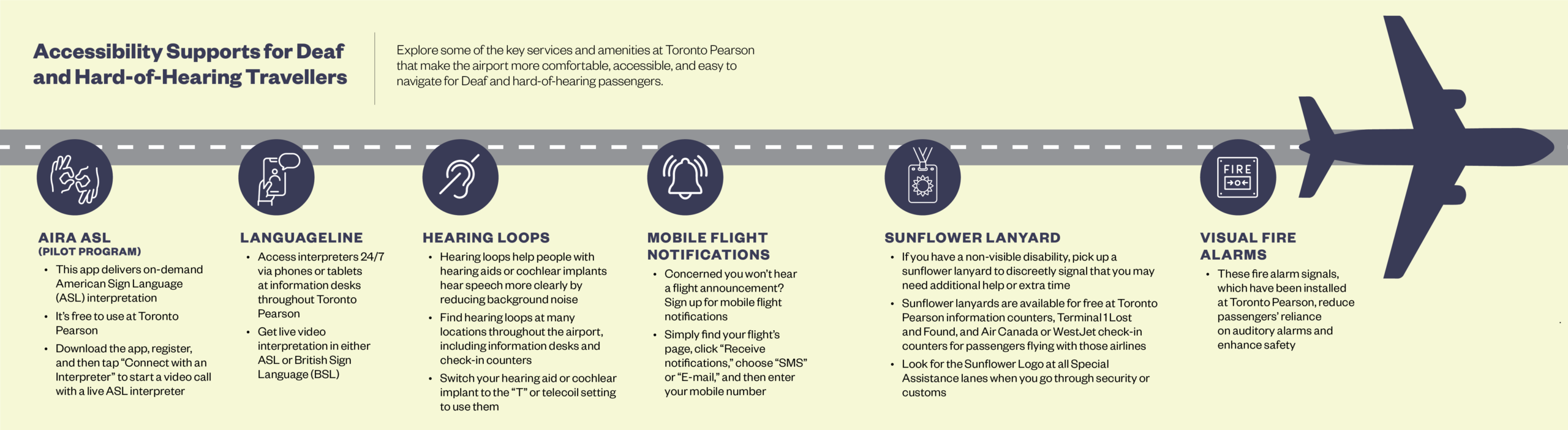
The airport is currently piloting Aira ASL, a free app that delivers on-demand American Sign Language (ASL) interpretation. Passengers who are Deaf or hard-of-hearing can download the app, register, and then connect via a live video call to a trained ASL interpreter who can help passengers to communicate and navigate the airport with greater ease.
The airport also partners with a translation service called LanguageLine, with interpreters who can be accessed 24/7 via phones or tablets at information desks throughout the airport. LanguageLine offers live video interpretation for travellers who are Deaf or hard-of-hearing in either ASL or British Sign Language (BSL). It also provides translation into many other languages, including French, for those who are more comfortable communicating in a different language.
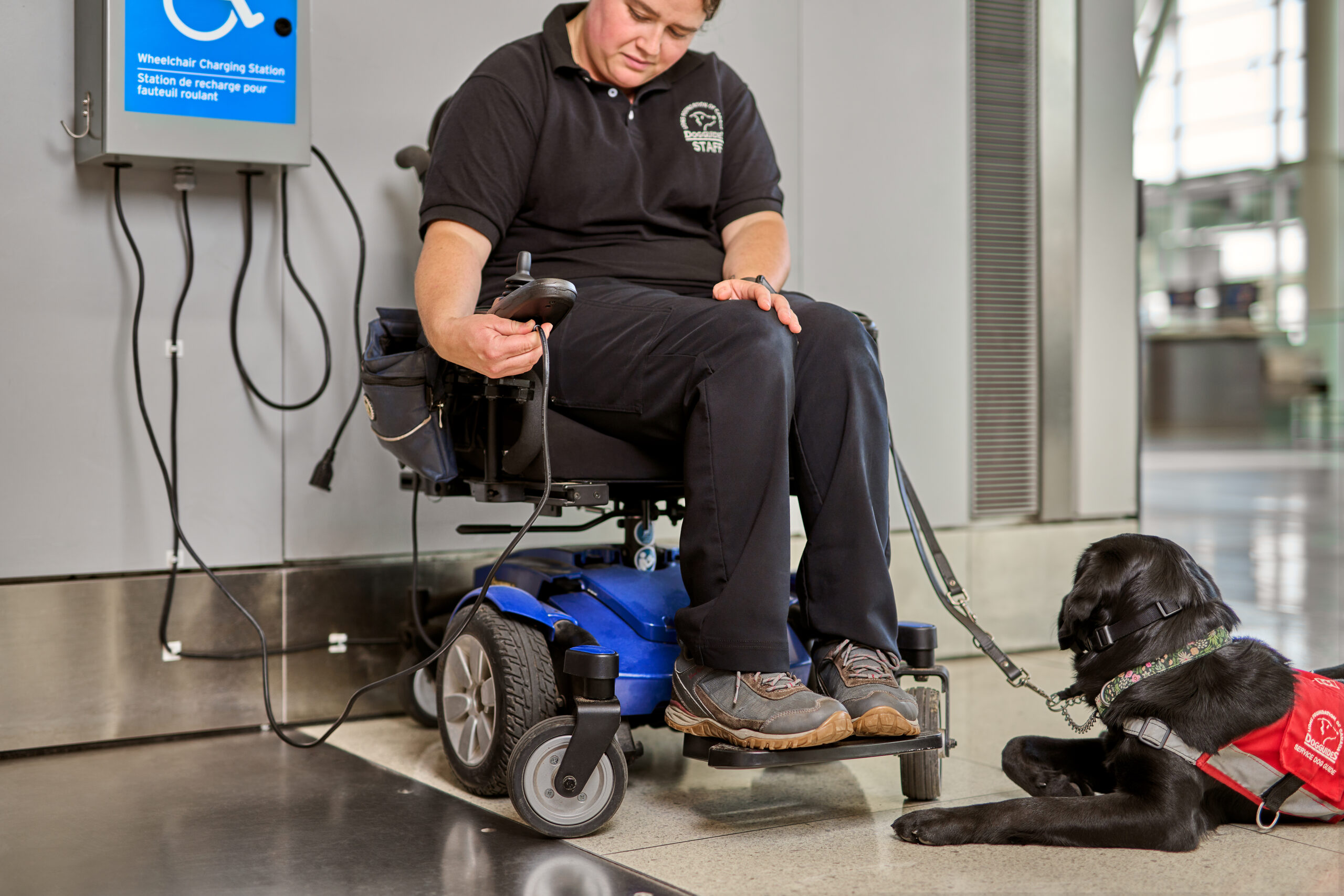
In addition to these communication supports, Toronto Pearson partners with the Lions Foundation of Canada Dog Guides (LFCDG), WestJet, and Air Canada to provide real-world airport and aircraft training for future service dogs. These sessions help dogs that support people with disabilities, including those who are Deaf or hard-of-hearing, gain exposure to airport cues so their future handlers can travel with greater confidence and independence.
Facilitating communication
Alongside its translation and interpretation services, Toronto Pearson has several other offerings in place to reduce barriers for travellers who are Deaf or hard-of-hearing.
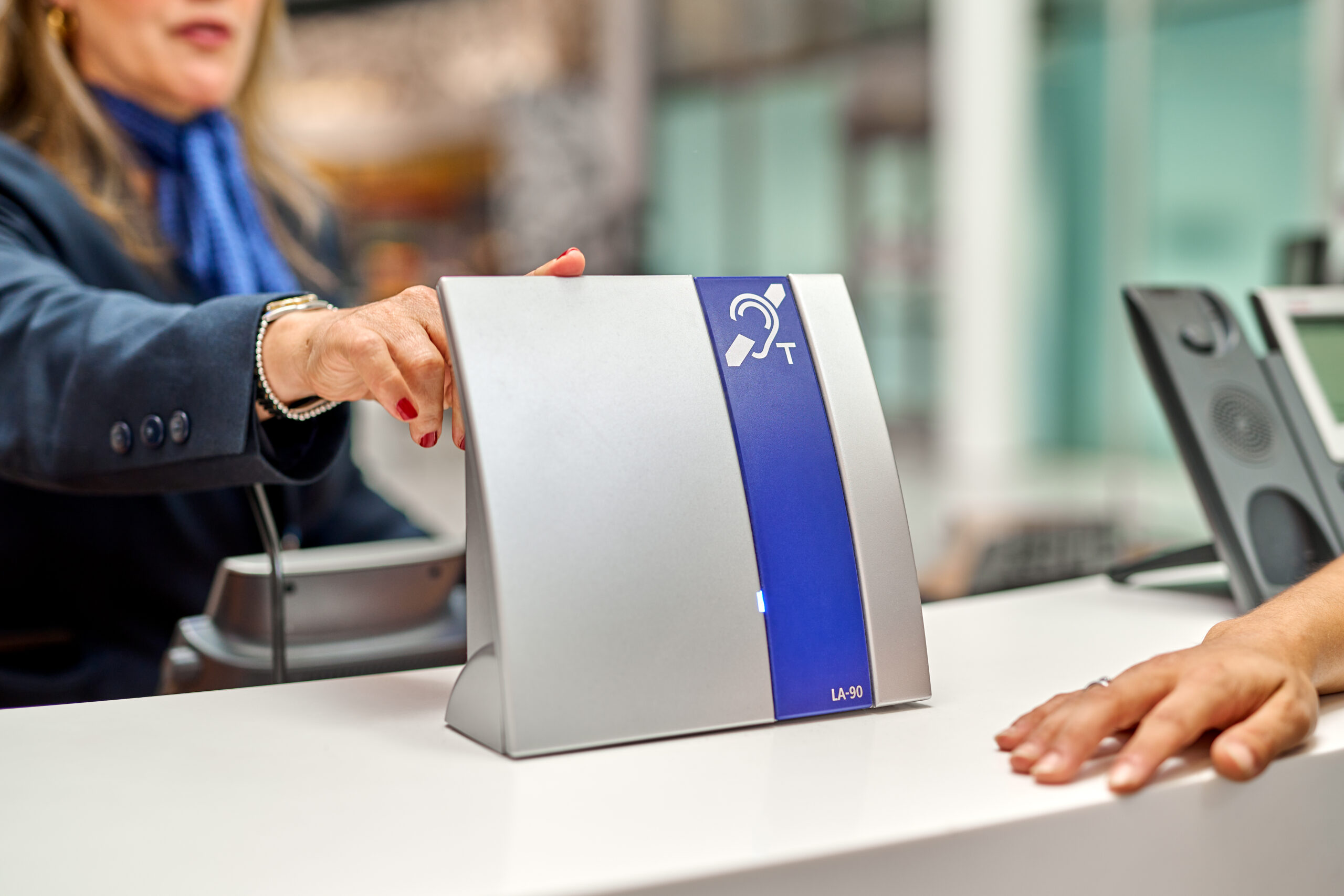
Hearing loops, which help people with hearing aids or cochlear implants hear speech more clearly by reducing background noise, are available at many locations throughout the airport, including information desks and check-in counters. Passengers have the option to sign up for mobile flight notifications, reducing the stress of missing important announcements. Visual fire alarm signals have also been installed at the airport for safety, again reducing passengers’ reliance on auditory announcements. Toronto Pearson has also hosted ASL-interpreted YYZ Live concert performances.
The airport partnered with Canadian Hearing Services, with the organization assisting with the development of ASL and Langue des signes québécoise (Quebec Sign Language, or LSQ) greeting videos at the airport’s information kiosks and participating in the Toronto Pearson Accessibility Advisory Council.
Support for non-visible disabilities
Deafness and hearing loss are often non-visible, meaning they may not be immediately apparent to others. Toronto Pearson provides support for Deaf and hard-of-hearing passengers, along with travellers with other non-visible disabilities, through various programs and services, including its sunflower lanyard and MagnusCards.
Anyone with a non-visible disability can pick up a sunflower lanyard at the airport, discreetly signalling to airport staff that they may need a bit of extra help or time while travelling. The Hidden Disabilities Sunflower is a globally recognized program that originated in the U.K., and Toronto Pearson was the first airport in Canada to adopt it.
MagnusCards is a free bilingual app that provides simple, step-by-step instructions to help users navigate the airport. While it was designed with neurodiverse people in mind, it can be a helpful tool for anyone wanting to get familiar with airport processes.
Preparing travellers before their journeys
Alongside MagnusCards, which features 26 Toronto Pearson Card Decks to help travellers navigate airport processes such as check-in and boarding, Toronto Pearson also offers a travel rehearsal program. It allows travellers with disabilities to practice their journey ahead of their trip with a guided walk-through of their airport route and the accessibility features available at the airport. This can help travellers know what to expect, identify any accessibility needs or potential barriers beforehand, reduce uncertainty and travel-related anxiety, and build confidence and independence.
Deafness and hearing loss are often non-visible, meaning they may not be immediately apparent to others.
For three consecutive years, the airport has also offered Ready, Set, Fly…with YYZ, a larger immersive airport familiarization tour that supports families and individuals with autism and other neurodivergent conditions, in partnership with Air Transat and Autism Ontario.
Recognizing Toronto Pearson’s accessibility work
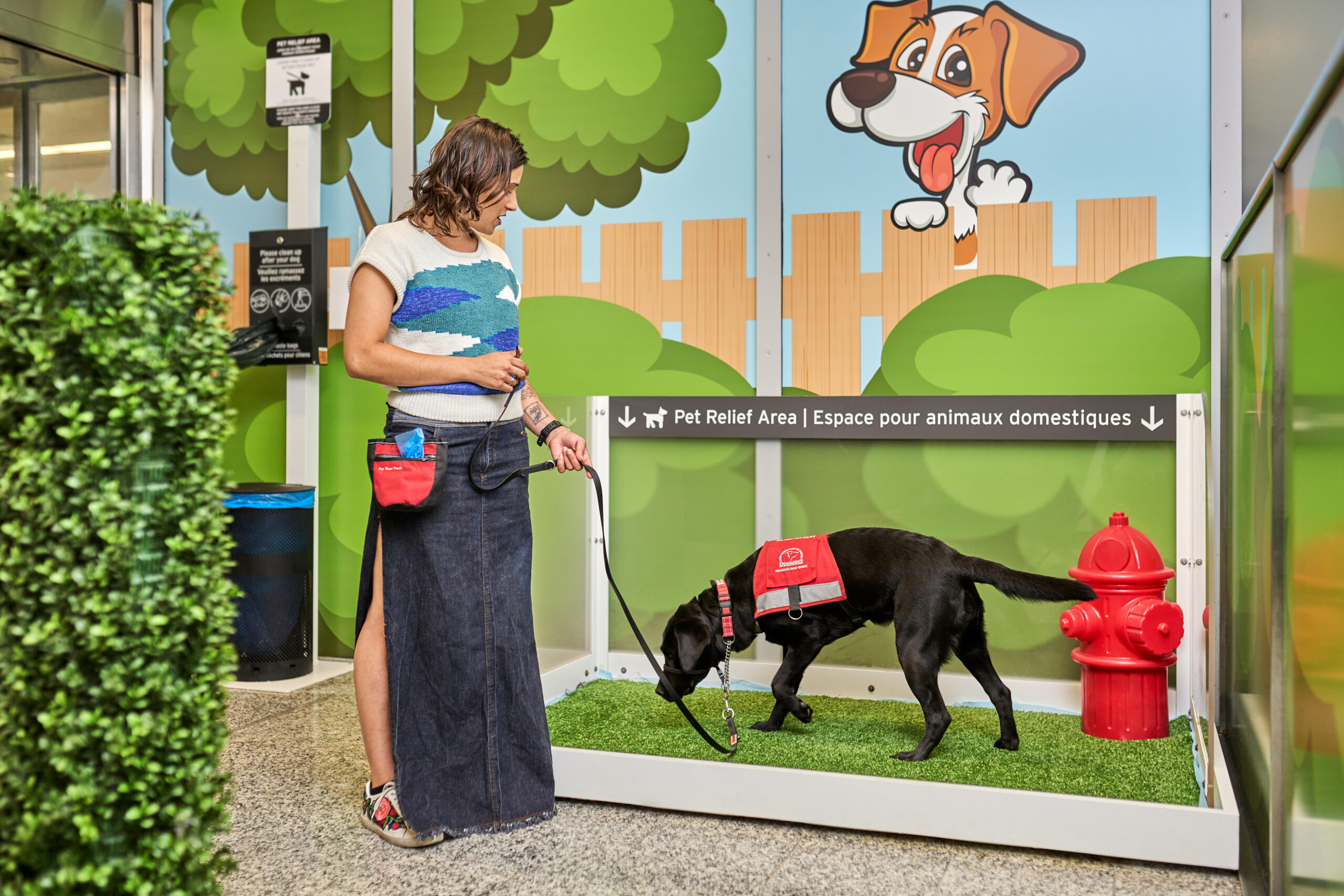
Toronto Pearson has taken the time to ensure it’s welcoming and accessible. Additional amenities created with accessibility in mind include Changing Places washrooms (assisted changerooms that include adult-sized change tables), dedicated charging stations for electric wheelchairs and mobility devices, pet relief areas for service animals, and accessibility seating in the terminals and at the gates.
In recognition of its efforts and its commitment to inclusive travel, the airport has received several accessibility certifications and accreditations. These include the Accessible Airport Award at the 2025 Airport Honour Awards, the Corporate Patron Award from LFCDG, the Level 3 Accessibility Enhancement Accreditation from Airports Council International, and the Rick Hansen Foundation Accessibility Gold Certification for meaningful access to buildings.
Building for today and tomorrow
Toronto Pearson recently published a three-year accessibility plan outlining the progress achieved to date, barriers identified, and future commitments to improve the passenger experience for people with disabilities. Recent, ongoing, and planned accessibility initiatives include adding more tactile and braille door signage to enhance wayfinding, piloting biometric technology with accessibility features built in from the start, leveraging Toronto Pearson Service Behaviours to set consistent service expectations and training related to accessibility, participating in research and exploring trials to better understand how to support passengers with disabilities, and much more.
Exploring accessibility services before travelling and participating in travel rehearsal tours where appropriate can make the airport experience more comfortable and predictable for people with disabilities and caregivers.
Explore Toronto Pearson’s accessibility services and book a travel rehearsal before your journey by visiting torontopearson.com/accessibility.