Health Insight
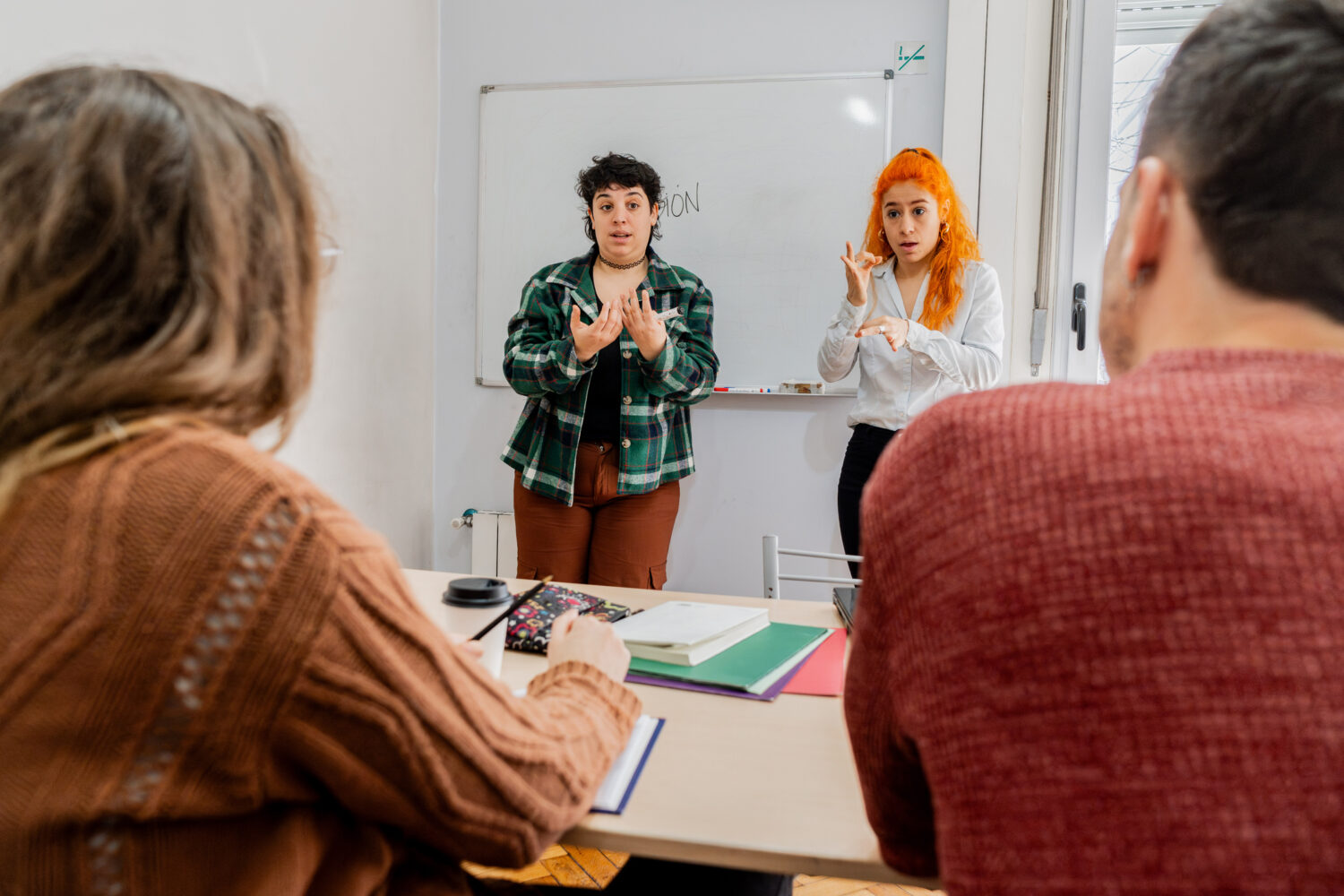

Explore George Brown Polytechnic’s leading Deaf and Deafblind Studies work-integrated learning opportunities, and discover a rich, impactful career.
Are you a member of the Deaf community, or are you interested in a helping career that puts your communication and creative skills to work? In Ontario, approximately 5,900 people currently work as translators, terminologists and interpreters. As experienced professionals retire and relatively few new workers enter the field, opportunities are expected to emerge for people with the skills and training to step into these important roles.
Building a strong, supportive environment for the Deaf and Deafblind community starts with specialized education. George Brown Polytechnic (GBP) offers four specialized programs serving Deaf, Deafblind and Hard of Hearing communities: the Academic Upgrading Program for Deaf and Hard of Hearing Adults (Deaf Academic Upgrading Program), ASL and Deaf Studies, Deafblind & Intervenor Studies, and the first degree of its kind in Canada, Honours Bachelor of Interpretation (American Sign Language–English).These unique learning pathways provide a strong educational foundation, and open the door to meaningful careers connected to Deaf and Deafblind communities.
Professionals with strong communication, accessibility, and community-based skills are in-demand, which is why GBP offers specialized education that prepares students for careers supporting Deaf and Deafblind communities. These programs are led by an expert faculty of dual-professionals, Deaf interpreters, including two nationally certified interpreters (COI) and published authors.
Paul Smith is a Communications and Mathematics Professor, in the Academic Upgrading Program for Deaf and Hard of Hearing Adults (Deaf Academic Upgrading Program/DAUP), Faculty of Community Services and Interdisciplinary Studies at George Brown.
DAUP supports Deaf and Hard of Hearing learners who want to strengthen their skills in English, American Sign Language (ASL), and/or Math.
What sets the faculty in this program apart?
One of the key strengths of DAUP is that all of our professors are Deaf or Hard of Hearing and proficient ASL users, with ASL as the language of instruction. Their lived experience and academic expertise allow us to create a learning environment that is accessible, culturally responsive, and grounded in an understanding of the experiences and needs of Deaf and Hard of Hearing learners.
How does this program work in terms of George Brown Polytechnic’s specialized program offerings and academic pathways?
DAUP plays an important role within George Brown Polytechnic’s specialized offerings by providing an accessible academic upgrading pathway specifically for Deaf and Hard of Hearing learners. From here, learners go on to further education, post-secondary education, apprenticeship opportunities, employment, or greater independence.
DAUP is more than an academic upgrading program. It provides Deaf and Hard of Hearing learners with an opportunity to strengthen their skills, build confidence, and prepare for the next stage of their journey.
Sarah Fallis is an Intervention Specialist with Deafblind Community Services (DBCS) and a graduate of George Brown.
How does DBCS work with George Brown?
George Brown students work in the DBCS literacy program and with our intervenors, exposing them to different communication modalities and technologies. Many of our staff are former graduates of the GBP program and have valuable insights into how courses relate to student’s future careers.
The Deafblind and Intervenor Studies program provides an eye-opening, interactive, and comprehensive program that really highlights the diversity of the deafblind community. I use the skills, knowledge, and academic resources from my courses daily. The focus all of my instructors had on autonomy and respect for clients helped me to be open to feedback while being confident in the quality of my work.
Why is work-integrated learning important for someone who wants to work with the Deafblind community?
The deafblind community is incredibly varied both in terms of communication methods, and in vision and hearing loss. This means that practical, hands-on learning is essential in order to understand the full scope of every individual’s needs. In addition, work-integrated learning allows persons with deafblindness to have a greater role in shaping the next generation of intervenors, supporting client autonomy.
The opportunity to learn more about George Brown Polytechnic’s Deaf and Deafblind Studies programs and the career opportunities they offer is coming up at the George Brown Polytechnic Open House on October 24.
Explore the programs, meet faculty, and learn more about the opportunities available. Visit www.georgebrown.ca/openhouse to register for the Open House and take the next step toward a career supporting the Deaf and Deafblind community.