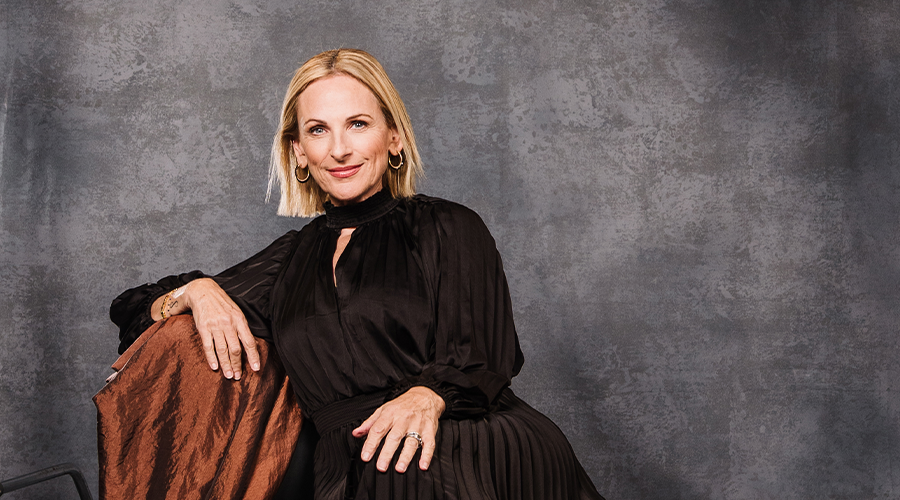
Marlee Matlin, American actress, author, and advocate, reflects on Deaf representation, authentic storytelling and what meaningful inclusion can look like for future generations.

What has been the most meaningful impact of using your platform to advocate for Deaf representation and accessibility?
The most meaningful part has been seeing what’s possible when Deaf people are finally given the opportunity to be seen, heard, and valued. If my career has helped open one door for another Deaf actor, inspired a young Deaf child to dream bigger, or encouraged a company, a school, or a filmmaker to think more inclusively, then that’s what I’m most proud of. As I’ve often said, representation isn’t about checking a box; it’s about changing expectations so that accessibility and inclusion are the norm, not the exception.
What does authentic Deaf storytelling look like to you, both in front of the camera and behind the scenes?
Authentic Deaf storytelling begins with including Deaf people at every stage of the process—in the writers’ room, on set, behind the camera, and in the decision-making. It means portraying us as complete human beings with ambitions and rich lives. When Deaf creators have a seat at the table, the performances are richer, and the stories become more authentic—just like our award-winning film, CODA; which, by the way was not just for Deaf audiences, but for EVERYONE.
How can hearing organizations and leaders move beyond basic accessibility and create environments where Deaf people are truly included?
Start with accessibility; not as an afterthought. Inclusion happens when Deaf people are invited from the beginning. In the end, better things happen when we rethink the question, “How can we accommodate Deaf people?” by instead asking, “How can we make sure Deaf people are part of shaping the conversation?”
What role do Deaf mentors, families, and community networks play in helping young Deaf people build confidence and pursue their goals?
No one should ever go it alone. I learned that lesson with mentors both hearing and Deaf. And don’t forget the role of supportive families, and strong community networks which can help young Deaf people see what’s possible. Ultimately, they help build confidence and reinforce the idea that dreams are limited only by one’s imagination.
What message would you like to share with Canadians during International Week of Deaf People about creating a more inclusive future?
I’d like to tell everyone that when we value different ways of communicating and experiencing the world, we ALLbenefit. My hope is that we continue building communities where every Deaf and hard of hearing person is not just accommodated, but welcomed, respected, and empowered to thrive.