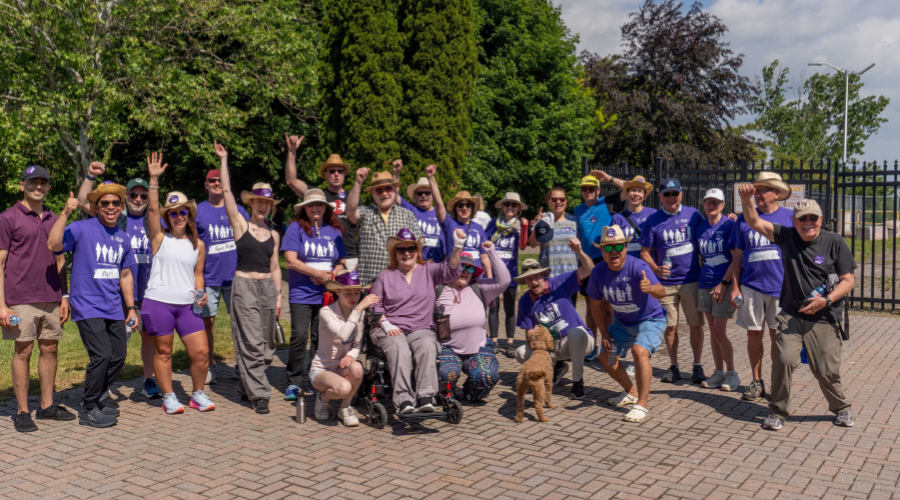

For Canadians living with the SOD1 genetic variant of ALS, access to this new therapy is having a positive impact.
In July of 2023, Pam Skinner learned she had amyotrophic lateral sclerosis (ALS), a progressive neurodegenerative disease that causes the nerve cells of the brain and spinal cord to die. Over time, people with ALS lose their ability to walk, talk, swallow, and breathe. Though Skinner was able to continue working at her demanding job as senior vice president of college operations at Niagara College, her mobility was quickly deteriorating. Within a year of diagnosis, she went from limping to using a wheelchair.
Through her ALS clinic, Skinner learned she has the superoxide dismutase 1 (SOD1) gene, a genetic variant affecting some people with ALS. Just over a year ago, she started on the first ever therapy to target this gene called Qalsody. “Since then, I’ve noticed no further progression and my hands seem to be getting stronger,” says Skinner.
Faster access pathways needed
While recent regulatory approval for Qalsody for people with SOD1-ALS is a positive sign, there are many additional steps that must take place before it becomes widely available and covered under public or private drug plans. Skinner was able to access it through Health Canada’s Special Access Program (SAP) while pricing negotiations continue. Although these programs play an important role in providing access, long-term access to approved therapies should not depend on temporary arrangements.
Though ALS affects only a small percentage of the population, without better treatments there’s a heavier burden on the healthcare system.
For the ALS community, the need for equitable access to treatments is especially important because ALS often progresses rapidly and treatment delays can have significant consequences for people living with the disease. “Once you lose your ability to swallow or breathe, you’re at death’s door, so there’s an urgency to speed up access to treatment,” says Skinner.
ALS Canada is advocating for faster reimbursement and approval processes. “Guided by the lived experiences of the ALS community, we’re actively engaged with the pan-Canadian Pharmaceutical Alliance (pCPA) and the provincial drug programs to support timely reimbursement decisions and equitable access to treatments for Canadians living with ALS. As new therapies emerge, access pathways must keep pace with scientific progress,” says Tammy Moore, Chief Executive Officer, ALS Canada.
New era of ALS treatments
Although only a small percentage of people with ALS have SOD1-ALS, Qalsody represents hope for the ALS community and an important step forward with more effective, targeted treatments.
As more therapies emerge and more Canadians learn their genetic status and treatment options, healthcare systems, reimbursement pathways, and support services must be ready to ensure equitable access to care. “Though ALS affects only a small percentage of the population, without better treatments there’s a heavier burden on the healthcare system, so there are both compassionate and practical reasons for having the healthcare system keep pace with advances in ALS research and care,” says Skinner.
Ultimately, equitable access to effective ALS treatments like Qalsody benefits patients and their families. It’s thanks to these advancements that Skinner can enjoy things in life that matter most to her. “If they can halt the progression of my ALS to where I am right now, that would be awesome,” she says.
To learn more about how ALS Canada is advocating for timely and equitable access to genetic testing, reimbursement, and approved treatments for Canadians living with ALS, visit als.ca.