


Dr. Ricardo Rendon
Professor in the Department of Urology, Dalhousie University & Chair, Canadian Urologic Oncology Group & Immediate Past-President, Canadian Urological Association

Dr. Fred Arsenault
President, AMSMNQ & Head of the Department of Medical Imaging, Centre hospitalier universitaire (CHU) de Quebec
How research and advancements are opening new possibilities for patients.
Prostate cancer is the most common cancer in men, with an estimated one in eight Canadian men expected to develop it during their lifetime.
“About 5 to 10 per cent of patients are diagnosed with metastatic prostate cancer when they first present,” says Dr. Ricardo Rendon, a professor in the Department of Urology at Dalhousie University, Chair of the Canadian Urologic Oncology Group, and Immediate Past-President of the Canadian Urological Association. “Most patients are diagnosed with localized disease, but research shows that about 20 to 30 per cent will eventually see their disease progress.”
Despite its prevalence, prostate cancer’s mortality rate is declining, reflecting both progress in screening and diagnosis.
An evolving care landscape
Treatment options for advanced prostate cancer are evolving. “We’ve been giving hormone treatment since the 1950s,” says Dr. Rendon. Hormone therapy, also called androgen deprivation therapy, works by suppressing the body’s production of testosterone or blocking its effects, since many prostate cancers rely on this hormone to grow. This can slow or stop cancer growth, though over time, some prostate cancers adapt and continue to grow despite low testosterone levels — a stage known as castration resistance.
Around 2001, chemotherapy became part of prostate cancer care, with clinical trials testing drugs in men whose disease had progressed after hormone therapy. Chemotherapy works by using drugs that travel through the body to destroy rapidly dividing cells, including cancer cells. Because it circulates through the bloodstream, it can reach cancer cells that have spread beyond the prostate.

After 2011, new oral therapies were added to hormone treatments. These therapies work by interfering with specific signals that prostate cancer cells use to grow.
Radiation has also been part of prostate cancer treatment, both in the early and late stages. Radiation therapy works by using high-energy rays or particles to destroy cancer cells. It can be used as an initial treatment, or after surgery if cancer cells remain or return.
The integration of nuclear medicine into the management of advanced stages of the disease represents a newer approach in cancer care. Therapies in nuclear medicine rely on prostate-specific membrane antigen (PSMA) biomarker testing: PSMA is the molecular target that enables both diagnostic imaging (PSMA positron emission tomography [PET] scans) and targeted treatments. Together, these established therapies — hormone therapy, chemotherapy, and radiation — continue to form the foundation of prostate cancer care. In recent years, newer diagnostic and targeted approaches have emerged, expanding the range of tools available to physicians and patients.
While treatment options continue to expand, each therapy comes with its own potential benefits and risks. Some treatments may cause side effects or may not be suitable for everyone. It’s important for patients to talk with their healthcare team about the potential advantages and limitations of each option to determine what approach is most appropriate for their individual situation.
How imaging and therapy are coming together in prostate cancer
Building on these advances, two key biomarkers, PSA and PSMA, play important roles in detecting and managing prostate cancer.
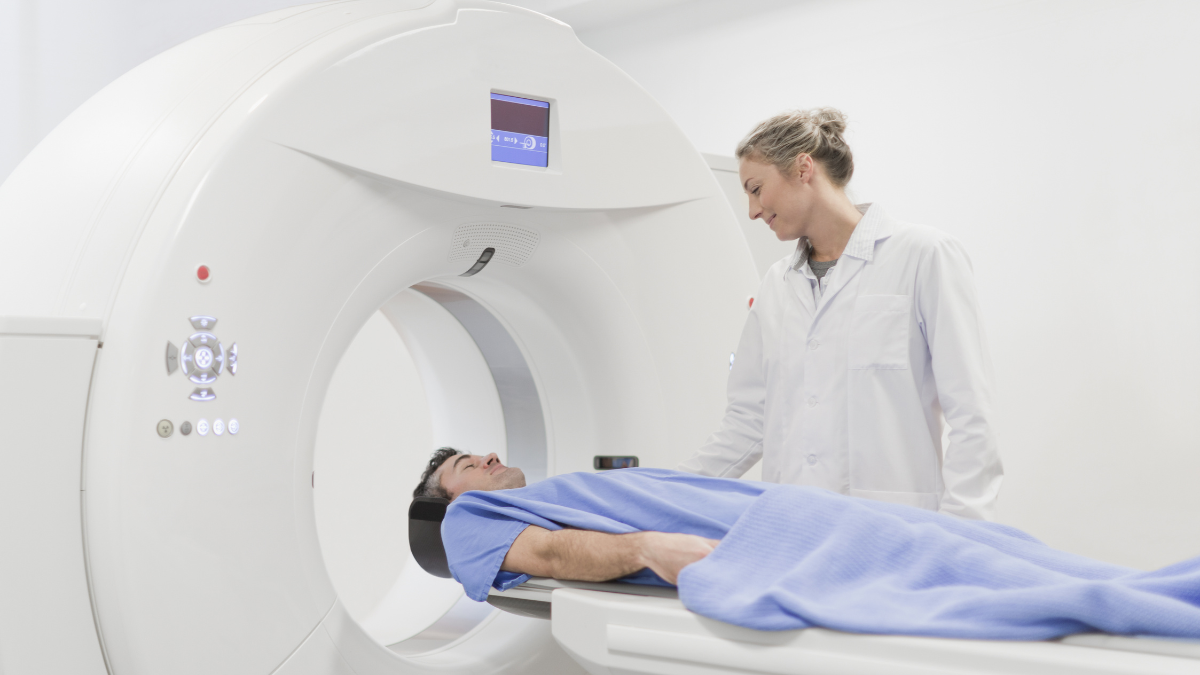
PSA (prostate-specific antigen) is a protein produced by the prostate gland that can be measured through a blood test. PSA testing is routinely used in prostate cancer screening and can help identify the disease early. It’s also used to monitor how the cancer is responding to treatment or if it’s returning after therapy.
PSMA is another protein found on the surface of prostate cancer cells. PSMA PET scans can provide valuable information about a cancer’s spread and can help to inform clinical decision-making, making PSMA important for patients and caregivers to understand.
“With PSMA, we can target this receptor on the cancer cell and either image or treat the disease,” explains Dr. Fred Arsenault, President of the Quebec Association of Nuclear Medicine Specialists (Association des médecins spécialistes en médicine nucléaire du Québec, or AMSMNQ) and Head of the Department of Medical Imaging (CHU de Quebec). That dual role makes it valuable.
“That’s theranostics — using the same technology for diagnosis and treatment,” adds Dr. Rendon.
PSA and PSMA PET scans play a role in how prostate cancer is diagnosed and in targeted treatments.
Personalized care and shared decision-making
With more treatment choices now available, conversations between patients and their care teams are becoming even more important. Understanding the role of each therapy, and when it may be used, helps patients and families make informed decisions together.
“Advances in cancer care provide patients with a range of treatment options,” says Dr. Rendon. “Having knowledge about what’s available can help patients make informed decisions with their medical team and decide on the most appropriate approach as the disease progresses. Ten years ago, we had very little to offer our patients whose cancer progressed. So much has changed in 10 years and we continue to research this area, which remains very active in oncology, with many trials underway. There is promise for the future.”
For more information about advanced prostate cancer and for access to additional resources, visit procure.ca or prostatecanada.ca.
This article was made possible with support from Novartis Pharmaceuticals Canada Inc.
FA-11524363E
