
AI is bringing personalized egg quality insights into fertility care, helping patients and clinicians make more informed treatment and family-planning decisions.
One of the most important parts of fertility has also been one of the most difficult to measure: egg quality.
Egg quality refers to the reproductive potential of an egg to successfully fertilize, develop into a viable embryo, and lead to a live birth.
But until recently, there has been no established way to assess the quality of an individual egg.
The Missing Piece of the Fertility Picture
When patients go through IVF or freeze their eggs, expectations are typically based on two factors: age and the number of eggs retrieved.
“These factors are important, but they’re just population-level measures,” says Dr. Dan Nayot, co-founder of Toronto-based health tech start-up Future Fertility and a practicing reproductive endocrinologist. “Age gives us a general idea of average egg quality based on what we see across large groups of patients, while the number of eggs tells us how many opportunities there may be. But neither tells us about the quality of the individual eggs in front of us.”
That distinction matters because egg quality varies widely between people of the same age, and even from egg to egg within the same cycle.
“Two patients can be the same age and retrieve the same number of eggs, but that doesn’t mean they’ll have the same outcomes,” says Dr. Nayot. “Often, the missing piece comes down to egg quality. In fertility care, we’ve had established ways to visually assess the quality of sperm and embryos, but not the egg. That’s a significant gap when we’re trying to understand the outcome of an IVF cycle or help patients plan what comes next.”
For people freezing their eggs, this has been especially limiting, leaving them with no clear insight into the reproductive potential of the eggs they stored.
A New Way to Understand Egg Quality
Future Fertility is addressing this gap. Its AI-powered software is already being used by fertility clinics in more than 35 countries, including many clinics across Canada, to analyze microscope images of eggs captured after retrieval and provide insight into their quality.
The technology is powered by the world’s largest dataset of egg images linked to reproductive outcomes across different patient populations and geographies. By analyzing this dataset, the AI has learned which features in an egg’s image are associated with its potential to hit key developmental milestones.
This gives patients and their doctors new, personalized information to consider alongside age and egg count.
Importantly, these insights are designed to support, not replace, the expertise of fertility specialists. Fertility is complex, and no single test can predict exactly what will happen for an individual patient.
Personalized Insight for Egg Freezing and IVF
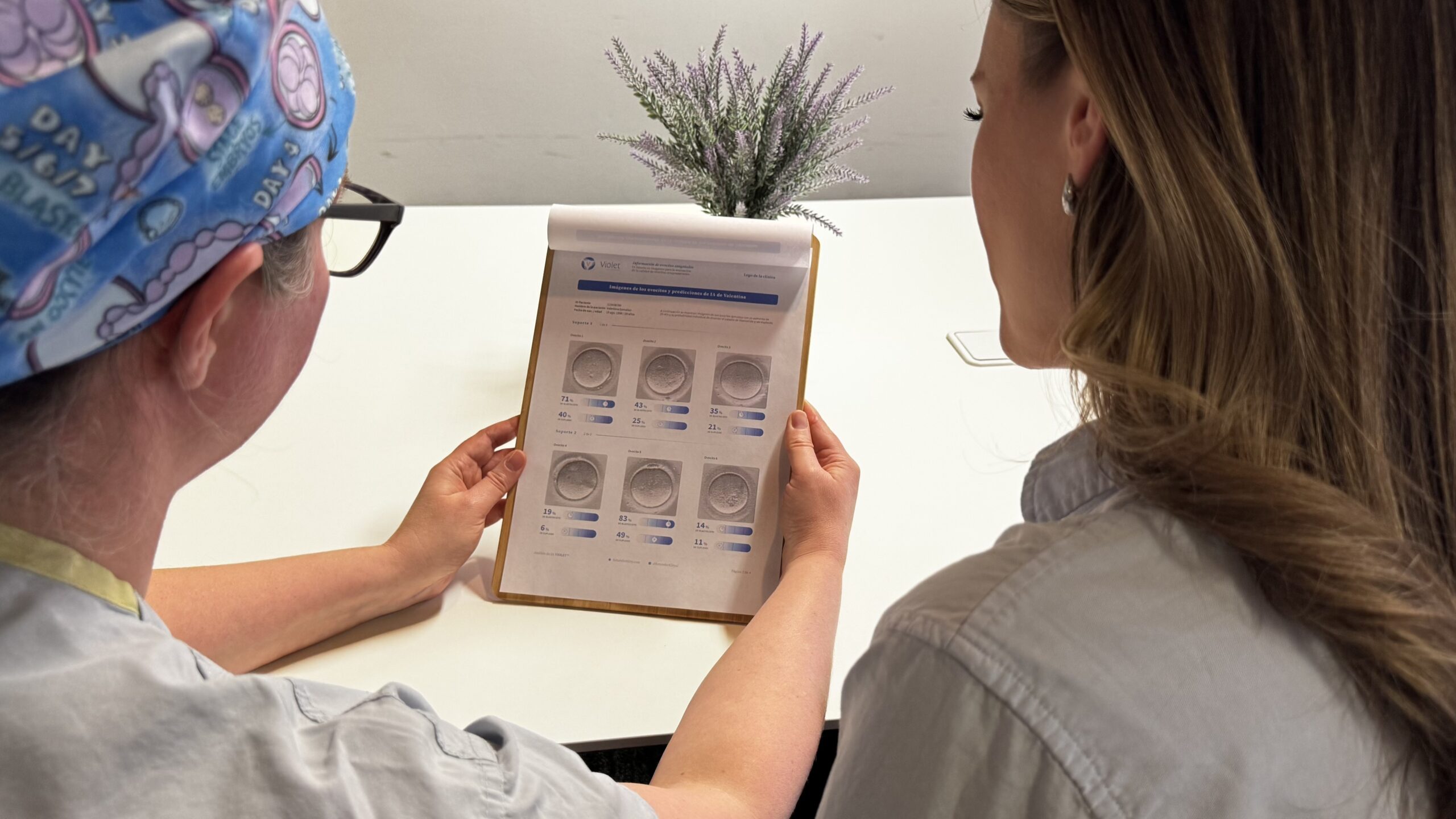
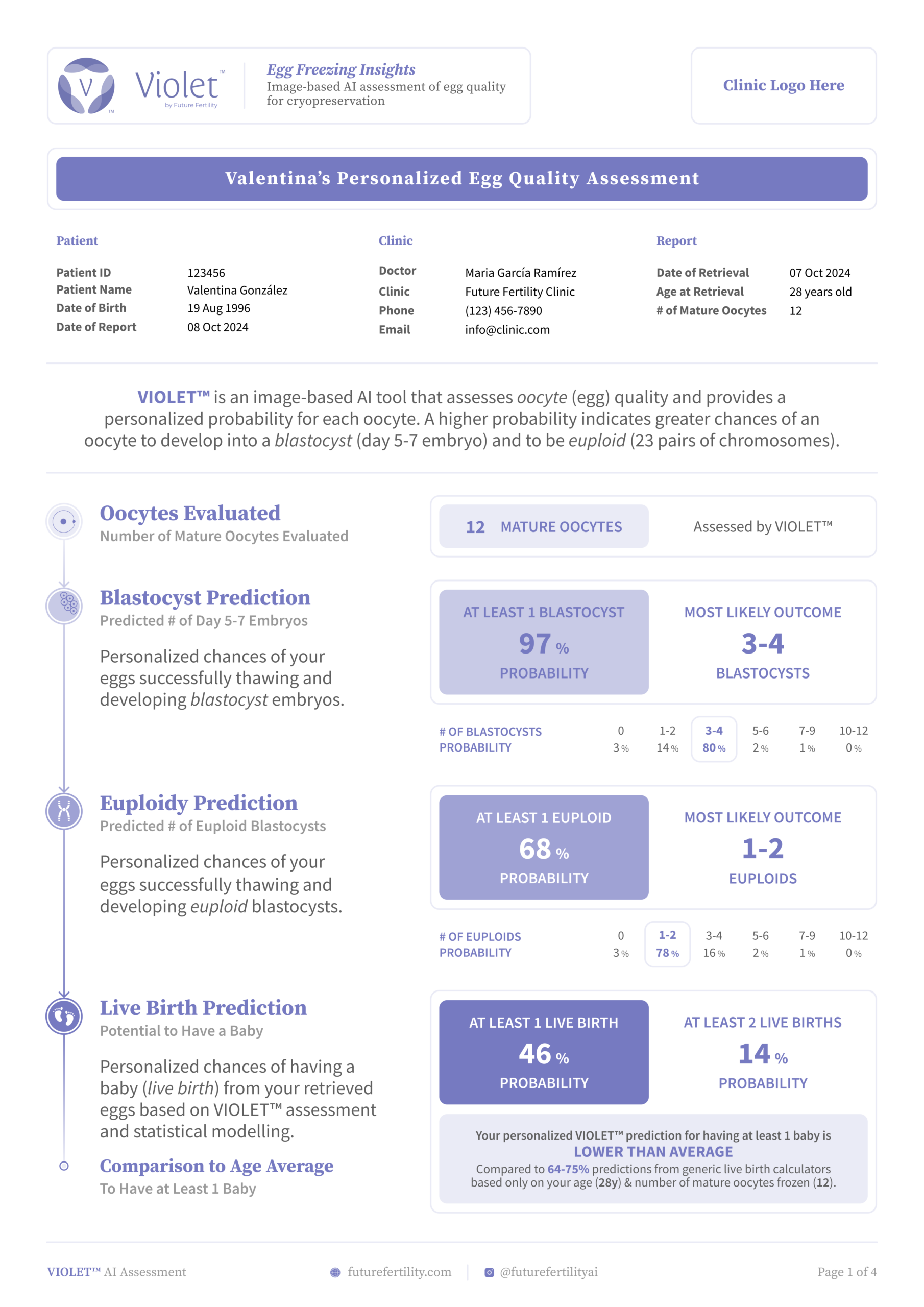
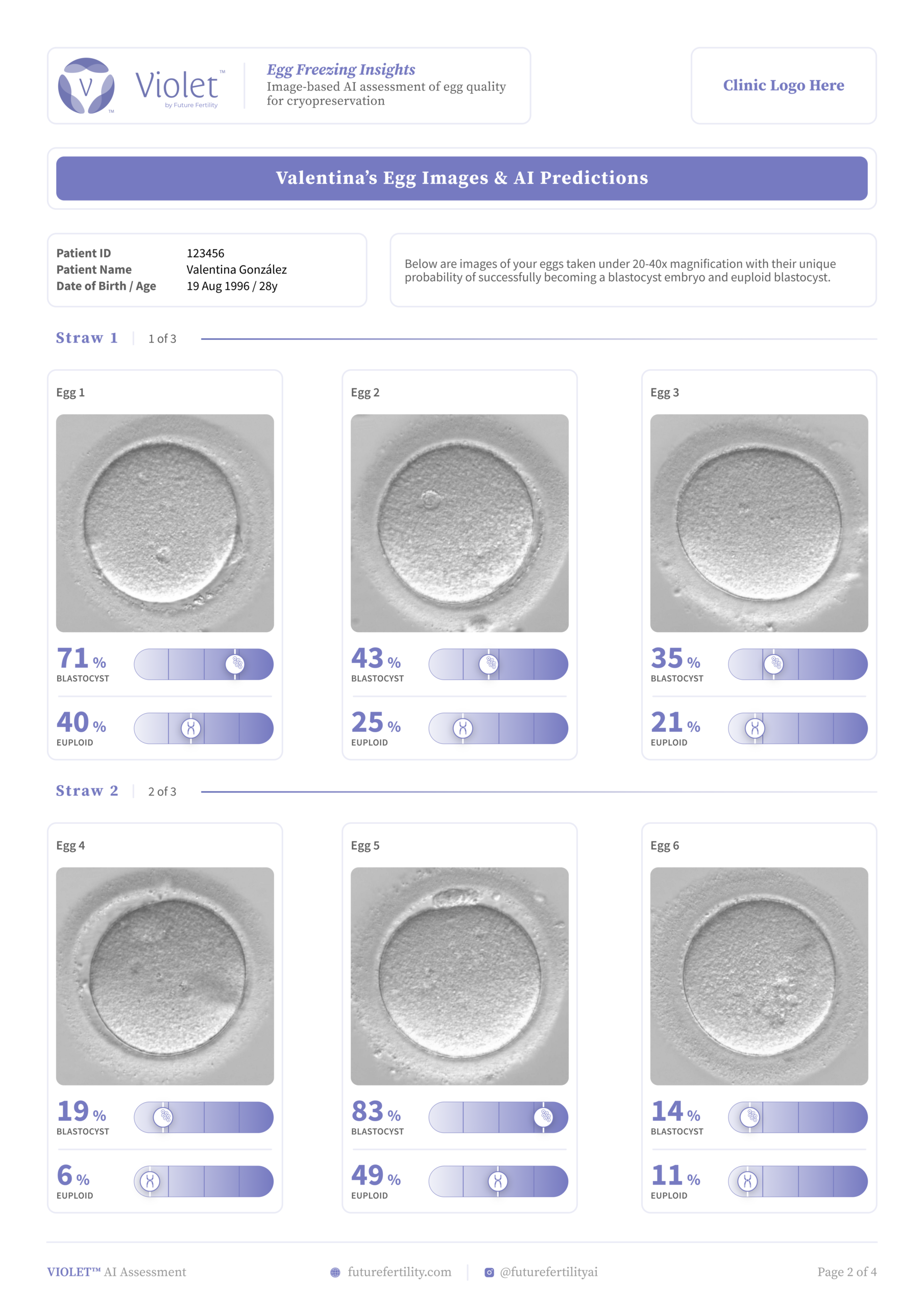
Patients receiving Future Fertility’s egg quality assessments from their fertility clinic take home reports that include images of each egg, along with quality insights for individual eggs and the group of eggs retrieved.
VIOLET™ reports are designed for people freezing their eggs. They provide a personalized estimate of the chance of having a baby based on analysis of the eggs retrieved, going beyond age-based assumptions.
These insights can help patients set more realistic expectations and have more informed conversations with their doctor about future planning, including whether another egg freezing cycle may be worth considering based on their family-building goals.
MAGENTA™ is designed for IVF patients. It provides an egg quality score linked to each egg’s potential to develop into a high-quality blastocyst embryo.
Understanding egg quality can provide additional context when IVF results differ from what might be expected based on age alone, helping doctors and patients better understand what may have contributed to the outcome and consider next steps.
Science-Backed and Filling an Important Gap in Fertility Care
AI-powered egg quality assessment is helping to provide information about individual eggs that was previously difficult to measure. Future Fertility’s technology has been validated by leading clinics around the world, with a large body of published scientific evidence supporting its performance.
It does not eliminate the uncertainty that comes with fertility treatment or guarantee an outcome. Instead, it adds another piece to the puzzle, helping patients and clinicians build a more complete picture when considering IVF, egg freezing and future family-building plans.
If you are considering egg freezing or IVF, ask your doctor whether they offer VIOLET™ or MAGENTA™ egg quality assessments as part of your care.
Find a clinic that offers personalized egg quality assessments.