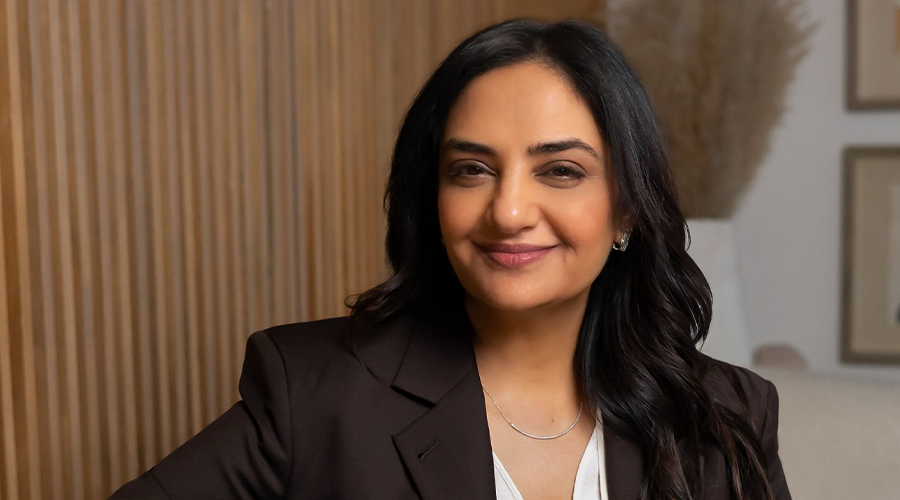
Hope, Honesty and Personalized Care: Dr. Sony Sierra on Navigating the Fertility Journey.

What are some of the most common misconceptions patients bring into fertility treatment, and how can better education help reduce fear or uncertainty?
A common misconception is that fertility is primarily a female issue. We know that men, or male fertility can contribute to almost half of the fertility problem, and I think we need to do a better job of approaching fertility as both a male and female issue.
Patients also tend to arrive with an enormous amount of information — from Google, social media, friends and online fertility communities. Some of that information leads people down difficult paths, creating anxiety around tests or treatments that may not actually be appropriate for them. More treatment is not necessarily better treatment.
I also think patients often underestimate how much age matters, particularly when it comes to egg quality. Some of that information is misleading, for example the ability to have a family of 3 over the age of 45. We have become very good at helping people build their families later in life, but IVF cannot completely overcome the biology of the aging egg and the limitations that presents.
These areas are some where education is so important. Informing people and patients about the biologic limitations of natural reproduction and assisted therapies. Its also important to spread the word that reproduction is incredibly complex, and even with our best technology, there are aspects of egg quality, embryo development and implantation that we simply cannot control.
Education is an important part of good fertility care that should leave patients feeling informed and empowered to understand their biology and what treatments can and can’t do for them.
How do factors such as age, medical history, lifestyle, and family-building goals shape the fertility treatment plan you recommend?
I really don’t believe there’s a one-size-fits-all approach to fertility treatment. We can see two patients with the same diagnosis and still end up with completely different treatment plans and different outcomes. No two people are exactly alike in terms of their fertility or reproductive potential, and its important to consider each person individually and not just as a diagnosis or a lab result.
Age is definitely one of the biggest factors, especially when it comes to egg quality and embryo potential, but it’s only one part of the story. I also look at ovarian reserve, any previous pregnancies or fertility treatments, medical and reproductive history, family history, sperm factors, and anything else that could affect implantation or pregnancy.
Lifestyle plays a role too, but its important to consider the individual in this as well. A lot of patients come in feeling like they need to completely change their lives in order to get pregnant. I try to focus on the things that actually have good evidence behind them such as their overall health and weight, smoking history, alcohol use, nutrition or dietary restrictions, regular exercise, good sleep, and getting any medical conditions well controlled. I think its important to encourage a healthy lifestyle without making people feel like they have to be “perfect” to have a chance.
Another important part of any fertility treatment planning are a person’s goals or dreams of the size of family they want and when. Those kinds of conversations really shape the plan we make together in terms of how aggressive or time sensitive we need to be in our approach.
At the end of the day, a person’s biology, their health and their aspirations with respect to their family are important to consider in making a treatment plan.
Fertility care can take a significant emotional toll. What kinds of support do you believe should be part of a truly comprehensive treatment experience?
I think we have to recognize that fertility treatment is not just a medical experience — it can affect almost every aspect of a patient’s life. There is the physical part of treatment, of course, but there is also the uncertainty, the waiting, the financial pressure, the impact on relationships and work, and sometimes the grief that comes with setbacks or pregnancy loss.
For me, truly comprehensive fertility care means supporting the whole patient throughout that journey. At TRIO, that includes access to our counselling team and fertility-focused mental health support, as well as our nursing teams and patient care coordinators who can help patients navigate what can otherwise feel like a very complicated process.
We also recognize that different patients need different kinds of support at different points in treatment. Some may benefit from individual or couples counselling, others from support groups or connecting with people who have had similar experiences. Nutrition and lifestyle guidance can also be helpful, particularly when it is evidence-based and focused on supporting overall health rather than creating another source of pressure.
Communication is a very important part of emotional support as well. Patients need to understand what is happening, what comes next, and who they can turn to when they have questions. Sometimes reducing anxiety is as simple as making sure someone doesn’t feel alone or lost in the process.
Ultimately, success in fertility care cannot only be about achieving a pregnancy. Of course, that is what we are all working toward, but how we care for patients along the way matters enormously. At TRIO we really want our patients to feel that they have a team around them for medical and emotional support, through the good news, the difficult moments, and everything in between.
For patients with conditions such as PMOS or endometriosis, how can an earlier diagnosis affect their fertility options and long-term reproductive health?
I think earlier diagnosis can be incredibly important because it gives patients the information they need to feel empowered and knowledgeable to make decisions regarding their fertility in a timely fashion.
With PMOS, for example, we can address irregular ovulation, metabolic health and other symptoms earlier not only to optimize fertility and family planning, but we can also start talking about future fertility long before someone is ready to have a baby. We can make recommendations to ensure menstrual cycles are tracked, and endometrial health is protected. We can also counsel regarding the long term health impacts of PMOS such as metabolic syndrome and diabetes, encouraging healthy habits with respect to diet and exercise early before early changes set in.
Endometriosis is a completely different diagnosis but can have a significant impact on health and the ability to conceive. Diagnosing this condition early gives people the information to seek appropriate care enabling a better quality of life but also an opportunity to maximize their chances for a family in the future. The reproductive impact on egg quality of endometriosis can be severe, but recognizing it earlier gives us an opportunity to think ahead about important topics such as pain management, ovarian reserve, the potential impact of surgery and fertility preservation (egg or embryo freezing).
This is an area I feel very strongly about. We need to be talking to younger patients about their reproductive health before they’re sitting in a fertility clinic trying to conceive. Too often, that’s the first time someone learns that a condition they’ve been living with for years may have implications on their ability to have a child.
Its also important to understand that an early diagnosis doesn’t mean you’re destined to have difficulty becoming pregnant or that you have to start fertility preservation treatments. But it does mean that you have the opportunity to understand your reproductive health earlier, monitor what needs to be monitored and give you the information to make choices that are right for you at the right time to make them.
How has fertility care evolved to better support single parents by choice, LGBTQ2+ families, and others pursuing non-traditional paths to parenthood?
One of the changes in our field that I have appreciated over time is that we have now a much broader understanding of what it means to build a family. There isn’t only one definition of family, and the services that we provide for fertility acknowledges this.
At TRIO, we care for single parents by choice, same-sex couples, transgender and gender-diverse patients, and families who may need donor eggs, donor sperm, donor embryos or a gestational carrier for a variety of reasons. Our program aims to help patients navigate the emotional, legal and practical aspects of third-party reproduction and fertility preservation as well.
Even the way we communicate has changed over the years. We do not assume someone’s gender, whether they have a partner, whose eggs or sperm will be used, who will carry the pregnancy, or what their family is supposed to look like.
What is the most important message you would give to someone who feels discouraged or uncertain about their chances of becoming a parent?
I think what I would say is that its okay to feel uncertain and being resilient or strong doesn’t mean you have to stay positive all the time. I think its important to hold onto hope, and find a way to tolerate some uncertainty, knowing there will always be a next step.
There are times when we need to have very honest conversations about prognosis and the importance of being realistic with patients even when the conversation is difficult.
Everyone talks about how fertility treatment isn’t always a straight line, and while people can’t always control the outcome of any particular treatment, they can strive towards health and happiness in all other aspects of their lives.
Sometimes we have to also talk about different paths to parenthood. There can be more than one way to build a family.
I often think about the balance between honesty and hope. My job isn’t to promise a patient that everything will work, because as much as I would like to, I can’t guarantee any particular outcome. I try to make sure people understand what is possible, what options are available, and what the evidence tells us about those options.
Looking ahead, which developments in fertility medicine give you the greatest hope for making family-building care more effective, inclusive, and accessible?
We’re getting better at using large amounts of data, predictive models and, increasingly, AI to understand which treatments are most likely to benefit an individual patient. I think that has tremendous potential not because technology should ever replace the physician-patient relationship, but because it may help us make better decisions, avoid treatments that are unlikely to help, and ultimately reduce some of the time and cost associated with fertility care. It will also help us provide a more personalize approach to fertility treatment.
Also fascinating is where the science is taking us in embryo development, implantation and early pregnancy. Despite everything we’ve learned, there is still so much we don’t fully understand, especially when we’re caring for patients with recurrent implantation failure or recurrent pregnancy loss. I look forward to science being able to guide us away from treatments that are largely empiric and towards interventions where we can say with much greater confidence that it will work.
But I don’t think the future of fertility care is only about new technology. Some of the most meaningful advances may actually be much simpler: educating people about their reproductive health earlier, improving access to fertility preservation-already so much more mainstream than when I started practice 20 yrs ago, and by continuing to remove barriers for all people that want a family to be able to access the information and treatment that is needed.
The future of fertility medicine that excites me includes early education, more precise, evidence-based treatment and more inclusive access to care to enable anyone with the wish the opportunity to build a family in a way that is right for them.